

Video & Blog
Why AI demands a procurement operating model rethink — and what it really means for your team
By Mark Webb |
Procurement has never had more technology at its disposal. Over the past 30 years, ERP, P2P, sourcing platforms, and spend analytics have transformed the digital landscape. And yet, despite genuine progress, the step-change in strategic impact that many CPOs are seeking has remained frustratingly out of reach. We believe that AI represents a genuine opportunity to change that — but only if procurement functions are willing to do something that has historically proved difficult: redesign how they operate, not just what tools they use.
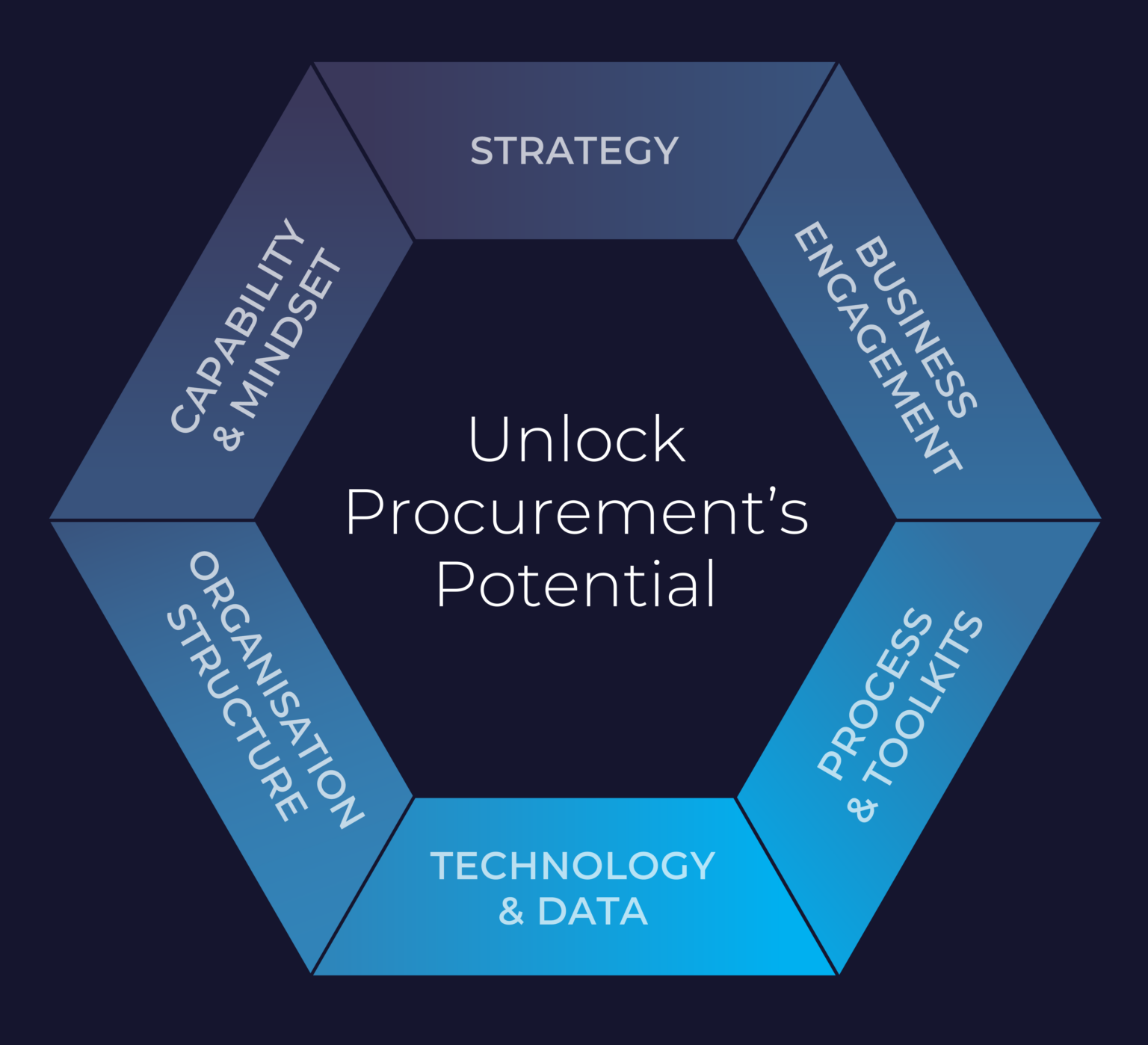
In our recent blog series, we explored all six dimensions of our Procurement Operating Model and what it takes to build a high-performing procurement function. But as we noted at the close of that series, AI is now changing and challenging every one of those dimensions.
To fully explore what that really means, we partnered with Procure Ai, a provider of custom built AI agents for Procurement, to develop a comprehensive whitepaper on designing a truly AI-native Procurement Operating Model. Here’s what we found, and what it means for you.
Getting the foundations right
Many procurement functions making their first moves with AI find themselves falling into one of three familiar traps:
- Running isolated pilots without a clear view of the organisational changes needed to scale.
- Treating AI as an add-on rather than a reason to rethink existing processes entirely.
- Assuming the operating model can evolve incrementally, when the pace of AI development demands something far more deliberate.
The result is a pattern that will feel recognisable: technology invested in, ways of working left unchanged, results that underwhelm.
Part of the problem is a misconception we see repeatedly: procurement teams equating an operating model with an org chart. They reshuffle roles, redraw reporting lines, and restructure teams, only to find that nothing fundamentally changes. An operating model is far broader than that. It defines how procurement creates value, how decisions are made, how work flows, and how the function connects with the wider business.
What’s needed isn’t simply tweaks to the org chart. It’s a holistic redesign of how strategy, processes, technology, and people work together — in that specific order. Strategy sets the vision. Processes define how work gets done and where AI operates. Technology enables execution. Only then can you determine the people needed, what they’ll do, and the skills they need.
Here’s a short insight into what that redesign looks like across each of the six dimensions of our Procurement Operating Model, and what AI changes in practice:
- Strategy must account for AI in two ways: the vision needs to consider what AI makes possible, and governance must establish guardrails for how agents operate. At the same time, execution shifts too — from annual planning cycles to continuous, always-on performance management.
- Business Engagement changes in character without losing its human core. Building trust, influencing decisions, and bringing stakeholders on the transformation journey are things no AI agent can do. What AI enables is more continuous and targeted engagement through automated alerts and embedded intake management.
- Processes and Toolkits must be reimagined for simplicity and rebuilt with AI-human collaboration at their core — not as an afterthought, but by design. As AI capabilities evolve, the boundary between human and automated work will keep shifting.
- Data and Technology shifts fundamentally in how it is valued. Data moves from an unloved byproduct of transactions to the foundation for automated processes and decisions, with integration between tools becoming the critical enabler.
- Organisation Structure changes not just in size but in nature. Roles shift from doing the work to orchestrating outcomes, with capacity planning now accounting for both human teams and AI agents.
- Capability and Mindset must keep pace. Digital skills become a fundamental requirement, but a deep understanding of procurement fundamentals remains essential — not despite AI, but because of it. You need to know what good looks like in order to judge whether an agent is delivering it.
These dimensions are deeply interconnected. Getting that redesign right — across all six, in the right sequence — is what separates AI initiatives that scale from those that stall.
The team size conversation you should be having
There is a tendency in the industry to acknowledge that AI will change procurement roles without being willing to say by how much. The honest answer is that the impact on team size will be significant, and procurement leaders deserve a clearer picture.
In our whitepaper, we did the calculation, and the results are compelling enough that every procurement leader should be asking these questions:
- What happens to operational buying roles as autonomous agents take over demand intake, purchase order creation, and routine supplier coordination?
- Will AI stop at transactional tasks, or does its reach extend into category management and strategic procurement?
- What new roles emerge as AI adoption scales, and where do they sit in the function?
The answers to these questions aren’t cause for alarm. They are an opportunity to build a leaner, more strategically powerful function. But they do require honest planning now rather than later, and a clear view of what the future procurement team actually looks like in practice.
That’s precisely what the whitepaper sets out.
How Future Purchasing can help
With 25 years of experience designing and implementing procurement operating models, we help procurement functions move beyond the pilots and build operating models that are genuinely fit for an AI-enabled world. Whether you’re at the start of that journey or looking to accelerate it, we combine deep functional expertise with practical, hands-on transformation and change management support, helping you redesign the right dimensions, in the right sequence, at the right pace for your organisation.
If you’d like to talk through what this means for your function specifically, get in touch with our team.
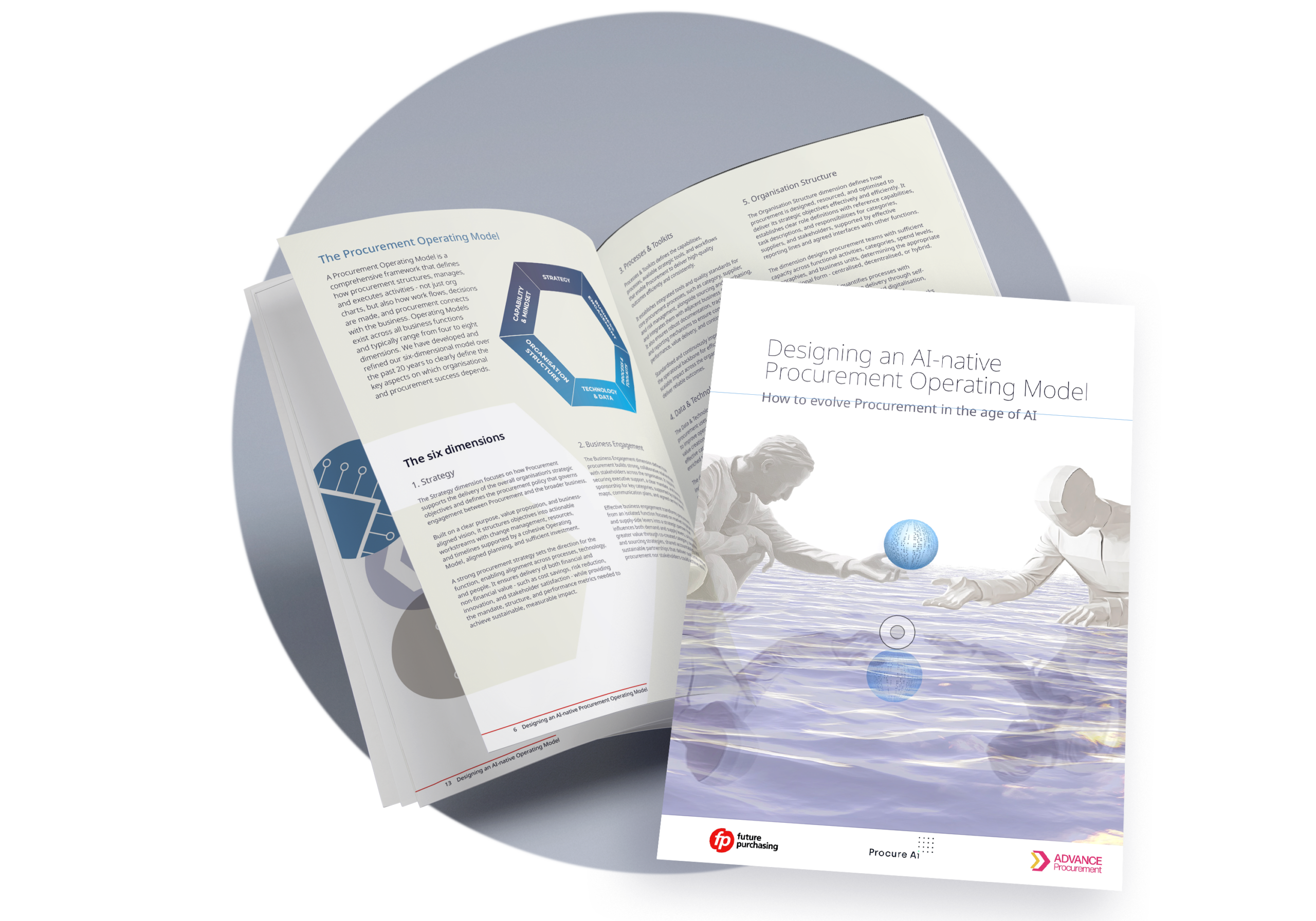
Our whitepaper, Designing an AI-Native Procurement Operating Model, goes deeper on all of this.
It covers how each of the six dimensions needs to evolve, the specific impact of agentic AI on procurement team size and role composition, the three distinct levels of AI integration in operating models and what separates them, and a practical framework for sequencing the transformation.
Further reading in our procurement operating model series
- Why AI demands a procurement operating model rethink — and what it really means for your team
- Dimension 1: Strategy – Building your blueprint for success
- Dimension 2: Business Engagement – Elevating Procurement to a strategic partner
- Dimension 3: Process – Workflows that work
- Dimension 4: Data & Technology – Your Digital Advantage
- Dimension 5: Organisation Structure – Building teams that deliver
- Dimension 6: Capability & Mindset – Unleashing Team Potential
- Designing an AI-Native Procurement Operating Model > Download the white paper here

About Mark Webb
Managing Director
30+ years procurement experience in line management
and consulting roles.
Previous employment: Price Waterhouse, Mobil Oil and QP Group
Education: BSc in Management Science and MSc in Business by Research, Aston University
CIPS: Member