

Blog
10 key skills for successful category managers for 2026 and beyond
By Mark Hubbard |
The essential skills needed to succeed as a category manager are constantly changing. Historically, procurement departments have focused firmly on hard, functional skills, while training in behavioural or soft skills has been largely ignored. With the business environment changing quickly and the rapid advancements of technology and Artificial Intelligence (AI), a different skill set is required.
This article outlines the key skills needed to succeed in Procurement and Category Management in 2026 and beyond.
The changing procurement skills landscape
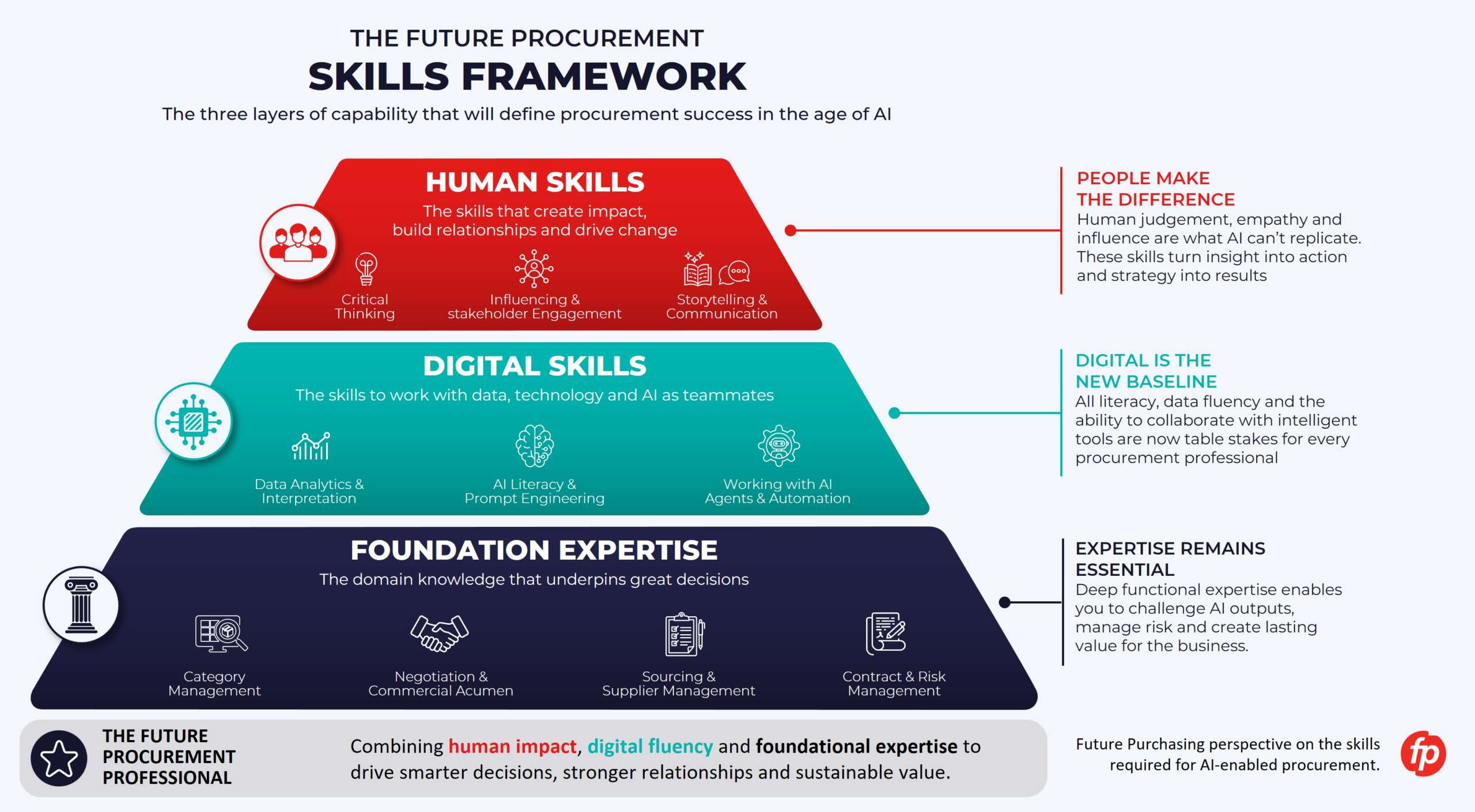
Regulatory changes and rapid technological advancements have introduced a new set of competencies that procurement professionals must master. Functional procurement skills like category management, supplier management, risk management, sourcing, negotiations, legal expertise, process knowledge, and financial acumen remain fundamental to category manager success. However, today’s category managers also need proficiency in areas like environmental, social, and governance (ESG) topics, data-driven decision-making, procurement technologies, and AI.
As procurement becomes more complex and technology evolves, staying up to date with emerging trends and developments is essential for success. But beyond functional and digital expertise, soft skills have become (have always been, really) increasingly vital for professionals to adapt to changing market conditions and effectively apply their technical skills.
While category managers must adopt a continuous learning mindset, organizations must also adapt and understand where their procurement capabilities need strengthening. Upskilling and reskilling are the top approaches to overcoming skill shortages, so focusing on training and coaching in soft skills and new technologies is a priority.
Top 10 skills needed to be successful in Category Management
To be successful in Category Management and Procurement in 2026 and beyond, we believe it’s essential to strengthen the following skills alongside foundational procurement capabilities.
10
Communication and storytelling
- Category managers regularly collaborate with various internal stakeholders, such as finance, operations, and legal, to align procurement strategies with business goals. Communication skills, including verbal and written communication and compiling presentations, are critical to getting stakeholders on board.
- However, data alone may not persuade stakeholders to engage. A compelling story connects the dots between procurement’s goals and the stakeholders’ objectives, highlighting mutual benefits and creating a sense of shared purpose. To make strategies compelling, their narrative must highlight the problem, solution, and outcomes. Category managers can help stakeholders emotionally connect with the story by using relatable examples.
9
Project management
- Project management skills in category management involve planning, executing, and overseeing procurement initiatives to optimize costs, supplier performance, and operational efficiency. By understanding how to coordinate cross-functional teams, manage timelines, and mitigate risks, a more structured focus is placed on implementing category strategies.
8
Change management
- Change management is the ability to effectively plan, implement, and guide organizational transitions. It involves applying strategies, tools, and techniques to manage the human, structural, and procedural aspects of change while minimizing disruptions and ensuring successful outcomes. Understanding the readiness and impact of changes on individuals, processes, and the organization helps category managers structure their engagement, enablement, and communications to gain buy-in for their strategies and execute them.
7
Creative and critical thinking
- Successful category managers possess both creative and critical thinking skills. Critical thinking involves analyzing information, evidence, and arguments to make reasoned, logical decisions. Meanwhile, creative thinking is the ability to approach problems, ideas, or situations from new perspectives, generating innovative and original solutions. Together, this helps overcome stuck approaches or ideas.
6
Data analysis
- Due to technological advancement and the rise of AI, businesses have access to more data than ever. Category managers must be confident with data analysis to get the full benefit from this stored information. The ability to collect, process, and interpret complex data sets to identify patterns and trends and extract meaningful insights is key to developing future-ready category strategies.
- For example, category managers can analyze spend data, pricing trends, and procurement metrics to identify opportunities for cost savings, risk mitigation, and process improvements. Strong data analysis skills also help category managers in demand forecasting, measuring contract compliance, and driving fact-based supplier negotiations.
5
Digital proficiency
- The procurement technology landscape constantly evolves, with new tools and software continually being introduced. As such, the most successful category managers are adept at learning, adapting to, and effectively utilizing the latest digital tools. The advancements of AI require a level of digital literacy to participate in and benefit from these developments.
4
Active listening
- To engage stakeholders effectively, category managers must employ active listening. Active listening means seeking to understand stakeholder concerns without interrupting, reflecting on their input, and paraphrasing it to demonstrate understanding. Active listening also includes asking clarifying questions to dive deeper into stakeholders’ expectations and separate their needs from wants.
3
Conflict management
- Individuals skilled in conflict management know how to navigate difficult conversations and complex interpersonal dynamics empathetically. They constructively address disagreements, objections, and differing objectives by focusing on shared goals and challenges.
2
Influencing and persuasion
- Influencing and persuasion skills enable individuals to guide or shape the thoughts, behaviors, or decisions of others by building trust, seeking to understand others’ perspectives, and effectively presenting ideas to encourage alignment or action.
1
Curiosity and continuous learning
- Curiosity is the ability to actively seek new knowledge, experiences, and perspectives with a sense of openness and enthusiasm. It involves asking questions, exploring ideas, and challenging the status quo to deepen understanding and foster continuous learning.
- In the context of Category Management, it refers to the active pursuit of understanding, exploring, and engaging with new technological advancements, market developments, or suppliers and their implications for the business. Curiosity is the most critical skill for successful category managers to navigate the changing business, technology, and procurement landscapes.
How do these skills empower category managers?
By developing the skills outlined above, category managers can:
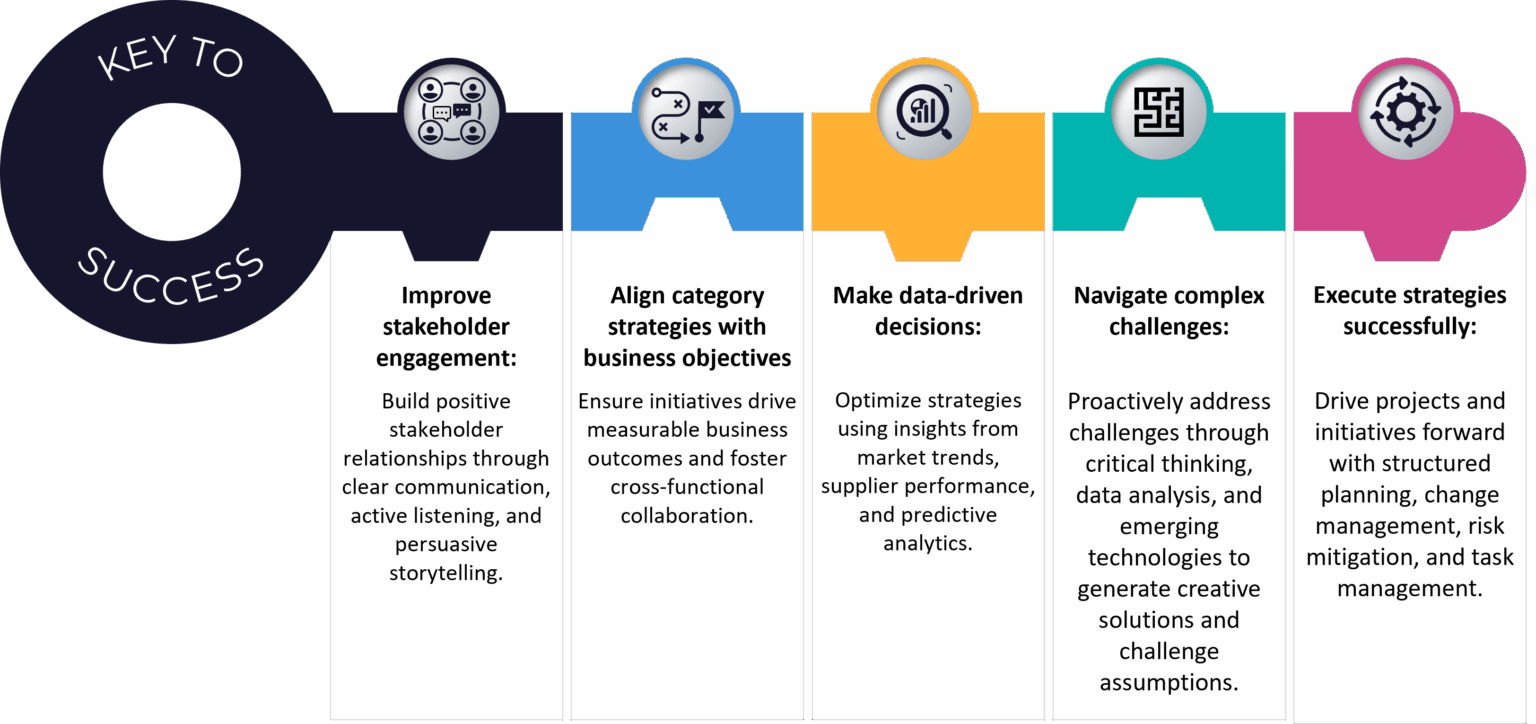
Prepare for the future of procurement
In the current procurement landscape, the only constant is change. Technological advancements, including AI and increased data availability, are changing the rules of the game. To adapt to changing market conditions, category managers must keep an open mind and approach new developments with curiosity.
Developing these skills is critical to success, both for individuals and organisations. Companies must focus on developing employees’ soft and digital skills alongside traditional functional capabilities to exploit opportunities and achieve strategic excellence. This holistic approach will also create a competitive differentiation in a competitive job market.
Developing these critical skills requires more than awareness – it demands structured learning pathways, expert coaching, and practical application. At Future Purchasing, we specialize in building the technical and behavioral capabilities that enable category managers to thrive in an evolving procurement landscape.
Whether you’re looking to strengthen your team’s soft skills, implement data-driven category strategies, or transform your procurement operating model for the AI era, our Learning & Development programs and Transformation Advisory services are designed to create lasting change.
Ready to unlock your procurement team’s potential and prepare them for the challenges of 2026 and beyond? Contact us today to discover how we can help build enduring capabilities that drive strategic value for your organization.
Further Reading
Webinar: Beyond functional experience: Building the soft skills that elevate Procurement performance
Video & blog: Procurement skills in the age of AI: what it takes to thrive
Blog: SRM and category management skills – How do you convert training into performance?

About Mark Hubbard
Director
30+ years experience in procurement and supplier management, in line and consulting roles
Previous employment: Positive Purchasing Ltd, SITA,
QP Group, BMW, SWWS, Rover
Education: BSc in Engineering Metallurgy, MBA University of Plymouth
CIPS: Member