



Blog
Procurement Operating Model in the age of AI
By Mark Hubbard |
Operating models aren’t new – they’ve been the backbone of how organisations function for decades. However, many procurement functions struggle to implement them effectively, as their understanding is limited to organisational structure concepts and models, rather than interdependent system design. As a result, they often miss critical elements that enable true value creation.
Now, as AI and advanced technologies promise to revolutionise procurement, getting your operating model right has become more critical than ever before. Organisations are discovering that technology alone isn’t the answer – it’s how that technology integrates with strategy, processes, people, and governance that determines whether you’ll see genuine transformation.
The old saying holds true: you need to master the rules before you can break them. To successfully rethink and redesign procurement operating models for the AI age, you first need to understand how they actually work and what makes them effective.
What is a procurement operating model?
A procurement operating model is the comprehensive framework that defines how an organisation structures, manages, and executes its procurement activities. It’s a blueprint that covers everything from people and processes to technology and governance. Think of it as the complete picture of how procurement operates – not just who reports to whom, but how work flows, how decisions get made, and how procurement connects with the rest of the business.
What is the purpose of an operating model?
The purpose of a procurement operating model is to drive efficiency, cost savings, compliance, and value creation across the procurement function. A well-designed operating model establishes clear processes, role clarity, integrated systems, and governance frameworks. This enables procurement teams to make consistent, strategic decisions aligned with business objectives while allowing the business to operate efficiently without disruption.
This transforms procurement from a reactive, transactional function into a proactive strategic partner. It provides the foundation that ensures procurement activities are efficient, effective, and adaptable to changing business needs.
How organisations are using operating models today: Myths and market realities
Despite the critical importance of operating models, many organisations fall into the trap of thinking it is just another version of their organisational chart. This narrow view excludes the interconnected elements that need to fall in place to enable procurement to deliver value efficiently and economically. Similarly, many businesses believe that investing in additional technology tools will help them achieve their goals more efficiently. However, technology is merely a means to an end and must be enabled through operational adjustments to deliver true value.
The cost of getting it wrong
Confusing an operating model with an org chart usually leads to inefficient operations that struggle to deliver consistent results. This prompts continuous reorganisations as leadership searches for solutions. These frequent restructuring efforts create uncertainty, hinder progress on strategic initiatives, and ultimately lead employees to question the credibility of their leadership.
More fundamentally, the lack of a comprehensive operating model forces procurement into an operational mindset. This mindset traps teams in the tactical sphere, limiting their abilities to engage in the strategic procurement activities needed to achieve business objectives.
What strategic procurement really means
Strategic procurement goes far beyond cost reduction and transactional purchasing. It’s about leveraging procurement as a competitive advantage through:
- Cost breakthroughs
- Internal coherence and alignment
- Intelligence and insights
- Supplier innovation partnerships
- Risk mitigation strategies
- Driving business outcomes that support organisational growth
Strategic procurement teams focus on achieving long-term results, building strong supplier relationships that foster innovation, and ensuring supply chain resilience.
However, strategic procurement requires absolute clarity of purpose and direction. Teams need to understand not just what they’re doing, but why they’re doing it and how their activities connect to broader business objectives. This clarity comes from having a well-defined operating model that articulates the strategic vision, defines success metrics, and provides the structural foundation for execution.
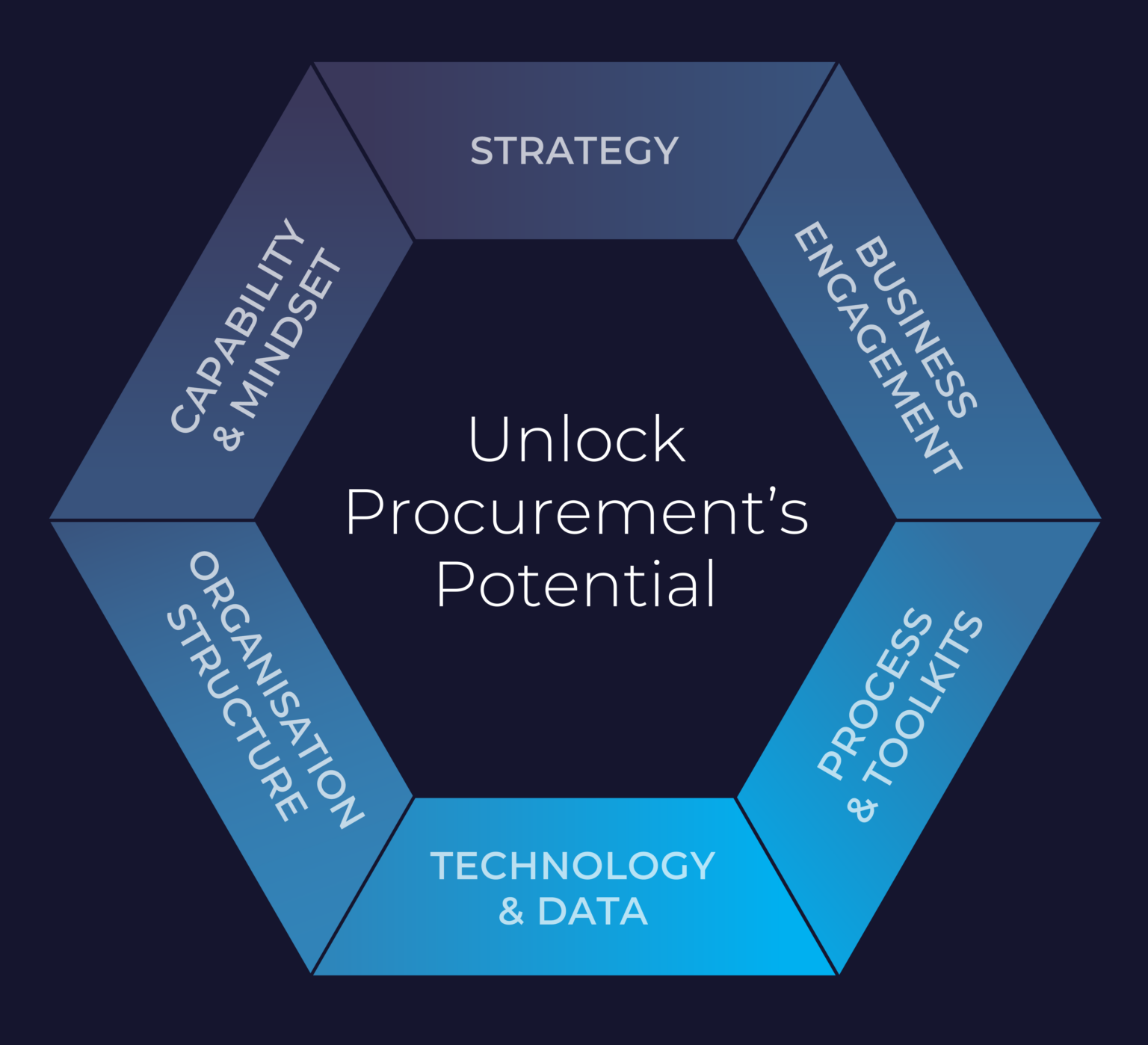
Future Purchasing’s Procurement Operating Model
Drawing from our extensive experience conducting maturity assessments and implementing category management across more than 100 companies, we have developed a comprehensive Procurement Operating Model. This model addresses the real-world challenges organisations face today.
Our model is closely aligned with the proven Galbraith Star framework, which is widely recognised for designing effective business operating models that drive specific behaviours and outcomes. By taking into account the strategic hierarchy and understanding how different elements interconnect, our operating model provides a practical blueprint for genuine procurement transformation.
Operating model dimensions
Our procurement operating model encompasses six key dimensions that must be aligned and interact harmoniously with each other for a team to be truly effective. When these dimensions work together seamlessly, they convey a clear and consistent message to both the procurement team and business stakeholders about how procurement creates value.
The six dimensions are:
- Strategy: Defines how procurement supports organisational objectives through a clear purpose, value proposition, and business-aligned vision that delivers both financial and non-financial outcomes.
- Business Engagement: Defines how procurement can build strong, collaborative relationships with stakeholders across the organisation to elevate it from a transactional function to a strategic partner.
- Processes & Toolkits: Defines the capabilities, workflows, toolkits, and governance mechanisms that enable procurement to deliver high-quality outcomes efficiently and consistently.
- Technology & Data: Defines how procurement should leverage digital tools and information assets to improve efficiency, accuracy, and value creation through automation, analytics, and integrated platforms.
- Organisation Structure: Defines how procurement should be designed, resourced, and governed to deliver strategic objectives effectively, including roles, responsibilities, delivery models, and optimisation approaches.
- Capability & Mindset: Defines the people, skills, leadership, and culture requirements needed for procurement to deliver excellence through professional development and team identity.
The Path Forward
The age of AI presents unprecedented opportunities for procurement transformation, but only for organisations that build the right foundation first. A comprehensive operating model isn’t just about having the right organisation structure – it’s about ensuring all six dimensions work together harmoniously to create a function that can truly unlock procurement’s potential.
This shift from tactical to strategic procurement is fundamental. Operating models provide the framework that elevates procurement from a transactional function to a strategic business partner. When executed correctly, category management is at the heart of this transformation. It requires coordinated processes, clear governance, and integrated systems to deliver meaningful insights and supplier value.Without a robust operating model foundation even the most well-designed category management programmes have failed to translate initial success into enduring value delivery.
Organisations that continue to treat operating models as simple org charts will find their AI investments falling short of expectations. But those who take the time to understand how each dimension works and how they connect are taking the first step toward building a procurement function that’s ready for what’s next.
Ready to dive deeper? In our next blog, we’ll explore the Strategy dimension in detail – how to define a clear purpose, align with organisational objectives, and create a value proposition that transforms procurement from cost centre to strategic partner.
Further reading in our procurement operating model series
- Why AI demands a procurement operating model rethink — and what it really means for your team
- Dimension 1: Strategy – Building your blueprint for success
- Dimension 2: Business Engagement – Elevating Procurement to a strategic partner
- Dimension 3: Process – Workflows that work
- Dimension 4: Data & Technology – Your Digital Advantage
- Dimension 5: Organisation Structure – Building teams that deliver
- Dimension 6: Capability & Mindset – Unleashing Team Potential
- Designing an AI-Native Procurement Operating Model > Download the white paper here

About Mark Hubbard
Director
30+ years experience in procurement and supplier management, in line and consulting roles
Previous employment: Positive Purchasing Ltd, SITA,
QP Group, BMW, SWWS, Rover
Education: BSc in Engineering Metallurgy, MBA University of Plymouth
CIPS: Member
Further Reading

Video
The Procurement Academy – Building Lasting Capabilities at GKN Aerospace
09/09/2026
Watch
Video & Blog
Procurement skills in the age of AI: what it takes to thrive
23/07/2026
Read More

Video & Blog
Why AI demands a procurement operating model rethink — and what it really means for your team
06/05/2026
Read More