


Blog
Dimension 5: Organisation Structure – Building teams that deliver
By Mark Webb |
Organisation Structure is critical to procurement’s ability to deliver value. It determines how efficiently resources are allocated and therefore how effectively teams can deliver on strategic commitments and whether the function can operate with the clarity and coordination needed to drive meaningful business impact.
But while organisational structure is crucial, it is only one dimension of a comprehensive operating model. This is where many Procurement Teams go wrong. They equate organisational structures with the overall Procurement operating model. They redesign org charts, reshuffle roles, and implement new reporting lines -only to discover that restructuring alone doesn’t transform the function. For true transformation to take place, organisational structure must be aligned with the other dimensions like strategy, processes, business engagement, and capability building.
This blog outlines the elements of the Organisation Structure dimension and how they connect with other dimensions of the operating model to create a cohesive, effective procurement function.
What is the Organisation Structure dimension?
The Organisation Structure dimension defines how procurement is designed, resourced, and optimised to deliver its strategic objectives effectively and efficiently.
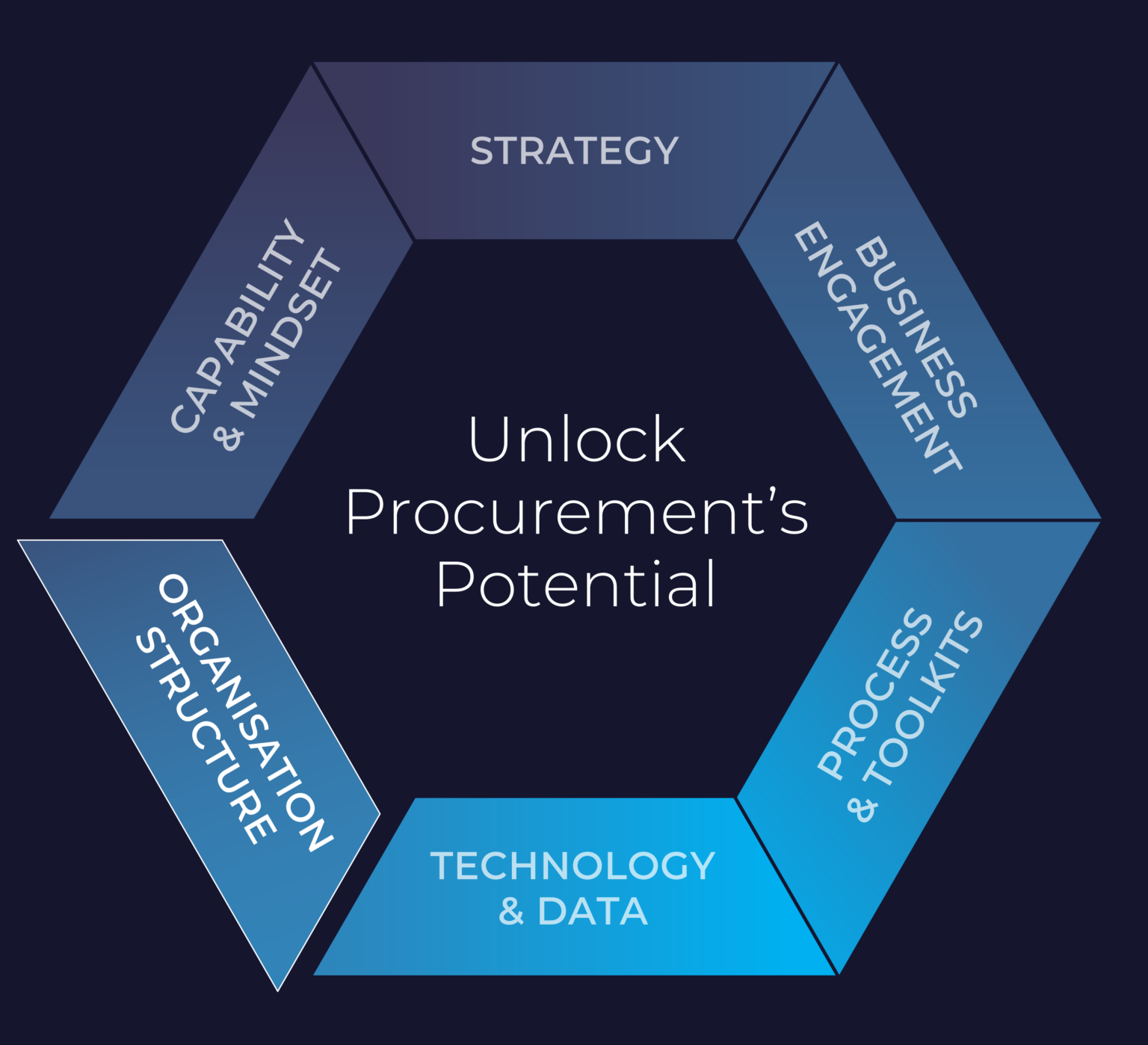
The Organisation Structure dimension is built on three pillars:
- Roles and Responsibilities: Establishes clear role definitions with reference capabilities, task descriptions, and responsibilities for categories, suppliers, and stakeholders across the organisation. This includes defining interfaces with other functions that are clear and agreed upon, as well as establishing effective reporting lines.
- Team Structure: Designs procurement teams with sufficient capacity for functional activities, categories, spend levels, geographies, and business units. This includes determining the appropriate organisational form – whether centralised, decentralised, or hybrid – and may include establishing Procurement Centres of Excellence.
- Activity Optimisation: Documents and quantifies procurement processes with time requirements, ensuring team workload capacity is up to date. This enables optimisation through various delivery models and technologies, including self-service, outsourcing, automation, and digitalisation.
Why is the Organisation Structure dimension important?
Organisation Structure determines Procurement’s capacity to deliver on its strategic commitments and directly impacts the function’s effectiveness and efficiency. Quantified processes and optimised delivery models ensure Procurement operates efficiently, with organisational design reflecting desired strategic priorities and preventing resource bottlenecks. Without proper organisational structure, developing and executing stakeholder relationships remains opportunistic and tactical, making their translation into valuable initiatives and activities ineffective.
Most critically, well-defined roles and responsibilities eliminate confusion and duplication of effort across the organisation. When interfaces within Procurement and with other functions are clear and cross-functional steering groups provide appropriate oversight, procurement can operate with the authority and coordination needed to drive meaningful change and deliver on its strategic priorities.
How Organisation Structure impacts other operating model dimensions
Organisation Structure must be built around the strategic direction, objectives, and governance principles established in the Strategy dimension. Roles & responsibilities are a direct derivative of the desired processes and ways of working, reflecting the interdependencies between them.
The team structure must also support the expectations towards business engagement. If Procurement has committed to co-creating strategies with stakeholders or providing dedicated category management, the organisational design must allocate sufficient resources or create roles that support these engagement models.
Lastly, the organisational structure works in tandem with the people dimension – roles require specific capabilities to perform tasks effectively, so there’s a strong connection to building the right skills and capabilities within teams.
Why endless reorganisations miss the mark
Here’s what we see repeatedly: organisations undertake structural redesigns that almost never have time to settle in before the next one begins. Why? Because they’re simply moving names on org charts instead of transforming the function.
Limiting discussion to org charts is a clear signal that transformation will fail. Without alignment to strategy, business engagement needs, and capability development, the reorganisation just rearranges deck chairs. The next restructuring will arrive within months when leadership discovers that the new structure didn’t solve the underlying performance issues.
The organisations that succeed view org models as an interconnected part of the overall operating model, where all pieces need to align to achieve the desired results. Structure isn’t the starting point—it’s the outcome of having clarity on strategy, engagement approach, processes, and capability requirements.
Getting it right: Structure as a reflection of strategy
Organisation structure matters, but it’s really a reflection of the role procurement wants to play and the value it wants to deliver, of its vision and ambition. It’s the physical manifestation of your strategic vision and engagement model.
Most teams get this upside down – starting with organisational design and then wondering why they don’t deliver the expected results. The right approach is to start with strategy, define how the business should be engaged, define the processes and supporting tools required, and then, and only then, design an org structure that can actually deliver on those commitments.
The missing piece for many organisations is capability and mindset. Even the best organisational design will underperform if the team lacks the skills, leadership approach, and cultural foundation to execute effectively.
Our next blog explores Dimension 6: Capability & Mindset—the people element that brings your operating model to life and determines whether your structure actually delivers the strategic value you’ve envisioned.
If you want to learn more about how we help determine suitable roles & responsibilities and build strong org models, talk to us about our Compass tool.
Further reading in our procurement operating model series
- Why AI demands a procurement operating model rethink — and what it really means for your team
- Dimension 1: Strategy – Building your blueprint for success
- Dimension 2: Business Engagement – Elevating Procurement to a strategic partner
- Dimension 3: Process – Workflows that work
- Dimension 4: Data & Technology – Your Digital Advantage
- Dimension 5: Organisation Structure – Building teams that deliver
- Dimension 6: Capability & Mindset – Unleashing Team Potential
- Designing an AI-Native Procurement Operating Model > Download the white paper here

About Mark Webb
Managing Director
30+ years procurement experience in line management
and consulting roles.
Previous employment: Price Waterhouse, Mobil Oil and QP Group
Education: BSc in Management Science and MSc in Business by Research, Aston University
CIPS: Member