


Blog
Dimension 4: Data & Technology – Your Digital Advantage
By Mark Webb |
Data and technology are powerful enablers to drive efficiency and impact in procurement. Modern procurement functions have many solutions at their disposal – ERPs, Procurement Suites, AI platforms, specialist solutions, data providers, and more. But having access to and buying technology isn’t enough.
The challenge lies in carefully orchestrating which tools support which processes or objectives, and in embedding them effectively within your procurement landscape. Procurement needs to understand not just what technology can do, but how it fits within the broader operating model to deliver its promised value.
This blog outlines the elements of the Data & Technology dimension and explains why aligning technology investments with your operating model is essential to getting any value out of them.
What is the Data & Technology dimension?
The Data & Technology dimension defines how Procurement uses information assets, digital tools, and AI to improve operational efficiency, process accuracy, and value creation.
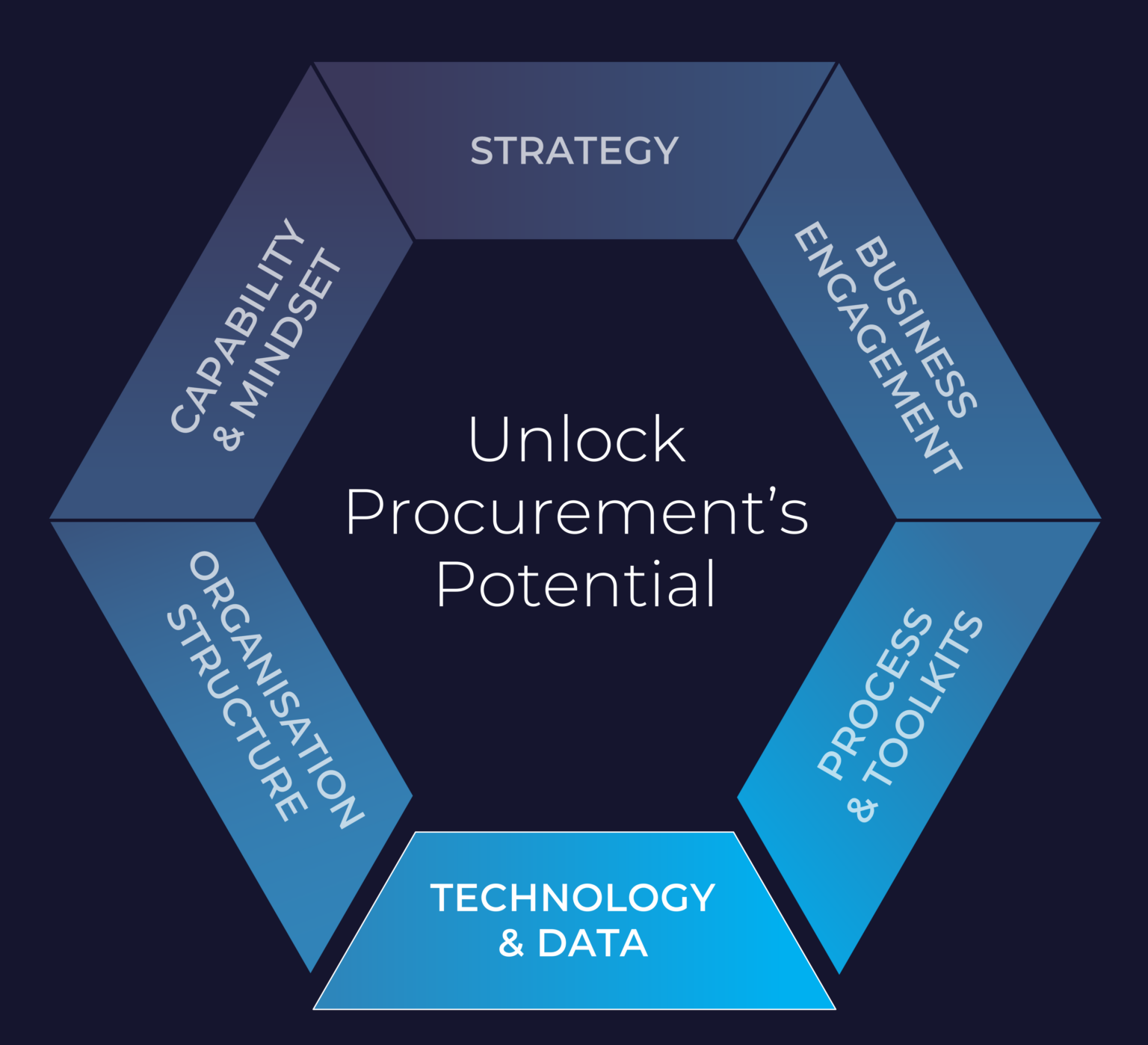
The Data & Technology dimension is built on five pillars:
- Data: Establishes a clear data strategy underpinned by an effective category taxonomy structure to ensure accurate, up-to-date spend data, enriched with reliable third-party supplier data and external sources.
- Tools & Technology: Digital capabilities across the end-to-end procurement process that support the execution and automation of defined processes in alignment with strategic objectives and compliance requirements. This includes ERPs, Procurement Suites, AI platforms, third-party data providers, or specialist solutions for Spend Analytics, Category Management, Market Intelligence, Supplier Relationship Management, Sourcing, Negotiations, Contract Lifecycle Management, Risk Management, Intake Management, or Purchasing.
- Innovation: Structured approach for actively identifying (scouting), testing (piloting), and implementing (scaling) innovative technology solutions (also possible for other areas) that enhance procurement efficiency and impact, ensuring the function stays current with emerging digital capabilities and AI advancements.
Why is it important?
Data & Technology serves as the enabler that amplifies procurement’s impact while reducing manual effort and increasing accuracy across all activities. Without robust data foundations and effective technology adoption, Procurement teams spend disproportionate time on administrative tasks rather than strategic value creation.
Accurate spend data and effective taxonomy structures provide the analytical foundation for informed category strategies and decision-making, enabling procurement to identify opportunities, track performance, and demonstrate value with confidence. Digitalised procurement processes not only improve efficiency but also create audit trails, ensure compliance, and generate insights that would be impossible to capture through manual approaches.
Most importantly, integrated technology platforms and innovative AI tools enable procurement to scale its impact without increasing headcount while maintaining high service levels. By combining Plan-to-Strategy with Source-to-Contract capabilities and automated Procure-to-Pay processes through seamless system integration or AI agents, technology eliminates friction in procurement operations, freeing resources for strategic activities that drive business value.
If designed as an integrated part of the operating model, the digital foundation enables procurement to operate as a true business partner by providing stakeholders with frictionless buying experiences and better decision-making insights while reducing operational disruptions that distract from strategic collaboration.
How Data & Technology impacts other operating model dimensions
Technology needs to support your procurement strategy by providing decision-making insights and automating execution. Having well-defined processes helps you select tools that support them, but new tools might also help you rethink how processes are designed or executed. This creates a dynamic relationship where process and technology influence each other.
People need to know when to use, trust, or challenge tools and their outputs, which requires a good level of digital and AI literacy. This means your capability development efforts must include building digital fluency across your team, not just technical procurement skills.
From a strategic and organisational perspective, the availability of tools directly affects the number of people needed to deliver objectives. Automation and AI can fundamentally reshape your capacity requirements and enable you to achieve more with leaner teams – but only if you’ve designed your processes and developed your team’s capabilities to leverage these tools effectively.
Technology as a strategic enabler
Procurement technology has been around for three decades but especially over the last five years, there has been a rise in best-of-breed solutions focused on dedicated processes or sub-processes. Digitalisation consistently takes a top spot in CPO priorities, as it promises efficiency gains and higher value delivery amid a stagnating or declining FTE base.
Unfortunately, technology is often treated as a standalone solution rather than being properly integrated into processes and ways of working. Teams buy tools expecting them to solve problems, but when the operating model isn’t aligned to support technology adoption, these investments fail to deliver the expected ROI.
Aligning the operating model with technology investments is the differentiator between teams that buy tools and teams that truly benefit from them. This means ensuring your tech strategy defines what you need technology to achieve (and what success looks like), that your processes are designed to leverage digital capabilities, that your people are equipped to use these tools effectively, and that your organisational structure is built around technology-enabled ways of working.
Maximising your technology investment
No other dimension has received as much focus over the last decade as Data & Technology. While many procurement teams are still developing their tech stack maturity, the opportunities for efficiency gains are substantial – especially amid rapid advancements in AI and automation.
The key is recognising that technology isn’t a silver bullet. It’s an enabler that amplifies the effectiveness of your strategy, processes, and people. When these elements are aligned, technology investments deliver transformational results. When they’re not, even the most sophisticated tools will underdeliver.
Ready to bring zour processes and technology to life? Our next blog will dive into Dimension 5: Organisation Structure, where we’ll examine how to design procurement teams that can deliver on both strategic ambitions and stakeholder expectations using clearly defined proceses and enabling tools.
Further reading in our procurement operating model series
- Why AI demands a procurement operating model rethink — and what it really means for your team
- Dimension 1: Strategy – Building your blueprint for success
- Dimension 2: Business Engagement – Elevating Procurement to a strategic partner
- Dimension 3: Process – Workflows that work
- Dimension 4: Data & Technology – Your Digital Advantage
- Dimension 5: Organisation Structure – Building teams that deliver
- Dimension 6: Capability & Mindset – Unleashing Team Potential
- Designing an AI-Native Procurement Operating Model > Download the white paper here

About Mark Webb
Managing Director
30+ years procurement experience in line management
and consulting roles.
Previous employment: Price Waterhouse, Mobil Oil and QP Group
Education: BSc in Management Science and MSc in Business by Research, Aston University
CIPS: Member