


Blog
From Good to Great: Key Insights on Reaching Procurement Excellence, Oct 2025
By Mark Webb |
On October 16, 2025, we hosted “From Good to Great: How to Reach Procurement Excellence” at the W Hotel in London. The event brought together procurement leaders, coaches, and experts to address a critical question: How can procurement teams unlock the value left on the table and truly achieve excellence?
The 2024 Global Category Management Report and our recent webinar on ‘The State of Procurement Training in 2025‘ revealed significant room for improvement on the path to procurement excellence. Our event aimed to equip attendees with practical tools and actionable insights to bridge this gap.
What Procurement Can Learn from High-Performance Sports Coaching
Sam Sheppard, the medal-winning Oxford Brookes and GB rowing coach, joined Peter Smith for an illuminating keynote that drew powerful parallels between elite sports coaching and procurement excellence.
Building a Culture of Excellence
Sam shared Oxford Brookes’ remarkable journey, emphasizing that their success wasn’t built on recruiting the best athletes, but on developing talent systematically. The key insight? You don’t need to start with the best people to build high-performing teams. Instead, focus on:
- Creating clarity around what makes an excellent team and communicating this consistently
- Establishing a supportive environment alongside accountability and high standards
- Developing people through structured programs rather than expecting instant results
The Power of Clear Standards and Measurement
One of the most striking revelations was how Oxford Brookes uses data to drive performance. Sam described their approach to setting training standards:
- They conduct testing sessions every six weeks to track progress
- Performance data allows athletes to self-diagnose areas for improvement
- Standards are clearly defined, making expectations transparent
The parallels to procurement are clear: without clear standards and consistent measurement, teams cannot objectively assess their performance or identify improvement opportunities.
Balancing Individual Development with Team Success
A fascinating discussion emerged around managing individual ambitions within team environments. In rowing, athletes compete for seats in boats while needing to work together. In procurement, professionals advance their careers while contributing to organisational goals.
Sam’s approach emphasizes:
- Making selection criteria transparent and fair
- Ensuring everyone understands what “good” looks like
- Creating an environment where lifting others up becomes part of personal success
- Building psychological safety so people can challenge each other constructively
Five Key Takeaways for Procurement Leaders
The session crystallised into five essential lessons:
- Will It Make The Boat Go Faster? –
Every decision should be evaluated against whether it advances the core mission - Focus on Performance to Achieve Results –
Process excellence leads to outcomes - Confidence and Belief –
Teams need to believe in their ability to achieve ambitious goals - Face the Challenges –
Address difficult issues directly rather than avoiding them - Working with Others –
True high performance requires genuine collaboration
Category Management Maturity: 12 Years of Global Insights
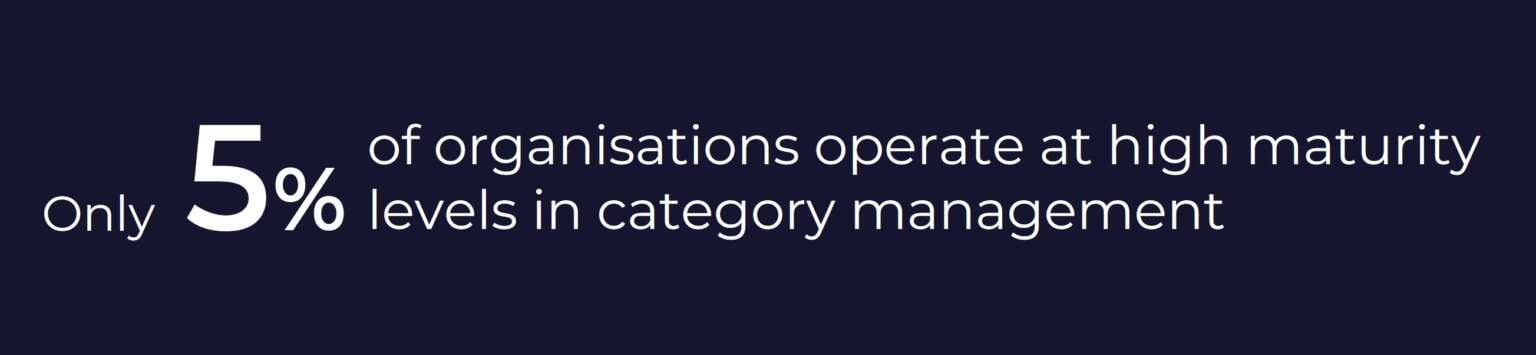
Mark Webb presented striking findings from the 2024 Global Category Management Report. After 12 years of research across hundreds of organizations globally, one statistic stands out: only 5% of organizations operate at high maturity levels in category management.
The research revealed what separates high-performing procurement teams from the rest: senior leadership sponsorship, dedicated category resources (not just added responsibilities), structured capability development programs, and digital tools that enable insight rather than just processing transactions.
Perhaps most concerning: despite increased investment in procurement technology and training, the performance improvement curve has flattened in recent years. Many organizations are implementing tools and processes without achieving expected value realization. The challenge isn’t just about having the right methodology—it’s about execution, capability, and organiszational alignment.
The Future Purchasing Maturity Assessment Framework
Matthew Jones outlined the comprehensive methodology used to assess and improve procurement performance. The Future Purchasing maturity assessment evaluates organizations holistically across five key dimensions: Strategy and Leadership, Organization and Governance, People and Capability, Process and Ways of Working, and Technology and Data.
Matthew emphasised that assessment is not the end goal, but the starting point for transformation. The framework provides objective benchmarking against global best practices, specific actionable recommendations prioritized by impact and effort, a logical roadmap for sequencing initiatives, and success metrics to track progress.
The key is translating assessment insights into a practical, achievable transformation program that the organization can actually execute.
Panel Discussion: Pathways and Pitfalls
The closing panel distilled key lessons for lifting procurement performance:
Critical Success Factors:
- Start with Why – Connect procurement excellence to business outcomes people care about
- Build Capability Systematically – Invest in structured development programs, not just experience
- Get the Operating Model Right – Clarify roles and ensure structure enables strategy
- Leverage Technology Wisely – Focus on adoption and change management, not just implementation
- Measure What Matters – Track leading indicators and use measurement to learn, not just report
Common Pitfalls:
- Trying to transform everything simultaneously instead of building focused momentum
- Underestimating the culture change required beyond process and tools
- Copying best practices without adapting to context
- Neglecting quick wins that maintain transformation energy
- Insufficient sustained leadership commitment
Key Takeaways: From Insight to Action
Drawing threads across all sessions, five powerful parallels emerged between high-performance sports and procurement excellence—each with clear implications for your journey forward:
- Will It Make the Boat Go Faster? (Mission Clarity)
Just as Oxford Brookes evaluates every decision against boat speed, procurement teams need a clear North Star. Does this initiative, investment, or activity advance our core mission of delivering value to the business? Mission clarity prevents distraction and enables better decision-making.
Your action: Start with honest assessment. Understand your baseline across all dimensions of procurement excellence. - Focus on Performance to Achieve Results
Championship teams focus on performance excellence, knowing results will follow. Similarly, procurement teams that focus on capability development, process excellence, and relationship building achieve better outcomes than those purely chasing savings numbers.
Your action: Build capability systematically. High performance comes from structured development, clear standards, and consistent investment in people. - Confidence and Belief (Psychology of Success)
High-performing teams believe they can achieve ambitious goals. In procurement, this means building confidence through capability development, celebrating successes, and creating psychological safety where people can challenge themselves and others constructively.
Your action: Lead the change. Be clear about why excellence matters, model the behaviors you want, and support your team through the journey. - Face the Challenges
Elite athletes don’t avoid difficult training or tough conversations. Procurement teams must similarly confront hard truths: capability gaps, underperforming suppliers, difficult stakeholder relationships, or process breakdowns. Avoidance delays progress.
Your action: Focus on execution. Success comes from disciplined implementation and persistent focus, not just having the right strategies. - Working with Others (Collaboration as Competitive Advantage)
In both rowing and procurement, individual excellence isn’t enough. The ability to work effectively across the boat or across the organisation separates good from great. Building genuine collaboration—with suppliers, stakeholders, and within teams—creates sustainable competitive advantage.
Your action: Measure and adjust. Regular tracking enables course correction, celebrates improvement, and keeps teams aligned.
As Sam Sheppard demonstrated with Oxford Brookes rowing, you don’t need to start with the best people or the most resources. You need clarity, commitment, and a systematic approach to developing excellence.
The question isn’t whether your procurement function can improve. It’s whether you’re willing to do what’s required to get from good to great.
Thank you to all our speakers and attendees who made this event insightful and engaging. For more information about the Future Purchasing maturity assessment or to discuss your procurement transformation journey, please reach out

About Mark Webb
Managing Director
30+ years procurement experience in line management
and consulting roles.
Previous employment: Price Waterhouse, Mobil Oil and QP Group
Education: BSc in Management Science and MSc in Business by Research, Aston University
CIPS: Member