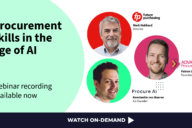

Video
The Procurement Academy – Building Lasting Capabilities at GKN Aerospace
By Mark Hubbard |
How to build an impactful Procurement Academy in the digital age
Many organisations want Procurement to take on more tasks, be more strategic, and deliver more measurable outcomes. In short, they want it to be an efficient and high-performing function.
At the same time, available resources are stagnant or declining. And recent advancements in AI and Procurement technology are further fueling the gap between expectations and Procurement’s ability to deliver. A classic Catch-22.
How to break the cycle
In this increasingly complex environment, capable people who possess the functional, digital, and behavioural skills relevant to Procurement are the only way to achieve more with less. With a constrained talent pool, upskilling and reskilling existing resources is the easiest path to success.
But years of practical experience have shown that training needs to be thoughtfully designed from the start to be effective. The content, the delivery, the impact measurement – all need to be in sync to drive training impact.
A Procurement Academy provides a structured capability journey aligned to organisational strategy, role expectations, and desired performance improvement.
Building a Procurement Academy for GKN Aerospace
In this webinar, we explored how to build an impactful Procurement Academy and how GKN strategically invests in people as a long-term strategy for building a high-performing procurement function.
We discussed
- The components of an impactful Procurement Academy
- The essential functional, digital, and behavioral skills
- How AI is changing training content
- How to align training to organisational strategy, role expectations, and desired performance improvement
We believe capable people are the key to unlocking superior value from Procurement.
The speakers:

Patrick Ruhe
GKN Aerospace
Patrick Ruhe is a senior procurement leader with more than 25 years of international experience in strategic sourcing and procurement transformation across private equity-backed, publicly listed, and family-owned organizations.
Prior to joining GKN Aerospace, he held a variety of senior leadership roles across diverse industries, including Industrial Automation, Food & Beverage, Construction, and Chemicals. His career has encompassed positions such as Chief Procurement Officer, Global Procurement Transformation Leader, and senior Procurement Excellence and category director roles.
Throughout his career, he has successfully led procurement capability development, transformation programs, and strategic initiatives that deliver measurable business impact.
At GKN Aerospace, Patrick’s focus areas include Procurement Excellence, A key priority is building world-class procurement capabilities through the Procurement Academy, enabling the function to evolve from a service provider into a trusted business partner and supporting GKN Aerospace’s mission to be the most trusted and sustainable partner in the sky.

Fabian Lampe
Advance Procurement
Fabian spent the last decade in Procurement working as Global Category Manager, Procurement Consultant, and Head of Marketing for a ProcureTech provider across different industries, categories, and geographies.
His focus on category management, sourcing, and procurement technology provides him with a deep understanding of strategic and operational procurement challenges and the potential of digital tools for driving improved outcomes through and for Procurement.
With his background in category management, supplier management, sourcing, and negotiations, Fabian connects technical capabilities with on-the-ground challenges to deliver practical relevance for sourcing professionals and solution providers.
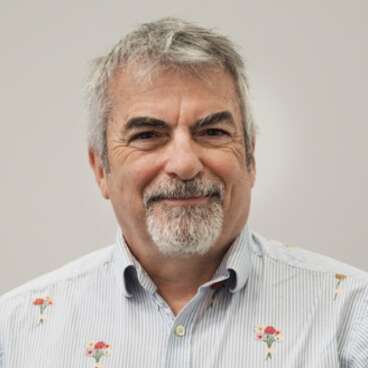
Mark Hubbard
Director, Future Purchasing
Mark Hubbard is a Director at Future Purchasing and facilitates this webinar. With over 30 years of experience in procurement and supplier management across both industry and consulting roles, he has held positions at a range of organisations. He holds a BSc in Engineering Metallurgy and an MBA from the University of Plymouth, and is a member of the Chartered Institute of Procurement & Supply (CIPS).
At Future Purchasing, he contributes to thought leadership in procurement, focusing on areas like category management, stakeholder engagement, and sustainable procurement practices. He has authored many articles including discussing the integration of net-zero carbon objectives into category strategies, AI application in procurement and the importance of aligning procurement activities with organisational goals.
He also plays a role in Future Purchasing’s Global Category Management Study, which benchmarks procurement practices worldwide to identify key success factors in category management.
Video transcript:
0:0:20.210 –> 0:0:26.770
Fabian Lampe
Hello and welcome to our webinar on how to build a Procurement Academy for sustainable capability development.
0:0:27.730 –> 0:0:52.290
Fabian Lampe
Over the past months, we have spoken at length about the impact of AI on the procurement operating model and the implications this has on skill development. But those discussions are mostly about context and content and not necessarily about how do we actually bring this to life, so delivery. So today we actually want to go deeper into how you can bring them to life and how do you actually build a Procurement Academy as a vehicle to do so.
0:0:52.570 –> 0:1:11.410
Fabian Lampe
So we will explore the why, the what and the how of sustainable capability development together with GKN Aerospace and Future Purchasing. So just as a quick round of introduction, my name is Fabian. I am the founder of Advance Procurement and I will moderate the session today.
0:1:12.370 –> 0:1:22.530
Fabian Lampe
We specialised on digital procurement and operating model design, and so that’s why I work with Future Purchasing. And I hand over to Mark to do his introduction.
0:1:25.730 –> 0:1:44.930
Mark Hubbard
Hi, I’m Mark Hubbard. I look after learning and development at future purchasing. I’ve been in this space for longer than I care to think about, 20 plus years doing this sort of activity. So it’s an area I passionately believe in and one of the greatest things in my working life is finding great teams of people and inspiring them to get more as Procurement.
0:1:51.10 –> 0:2:2.610
Fabian Lampe
I can vouch for that. I have known Mark now for some time and have been working with him. He does not lie. And so over to our second guest, Patrick, can you also please give a quick introduction of yourself?
0:2:2.930 –> 0:2:25.290
Patrick Ruhe
Yes, I can. Thank you, Fabian. My name is Patrick Ruhe. I have over 25 years experience in international sourcing and procurement roles, varying from operational roles to also more strategic roles up to director roles and CPO, working mainly in the space of process improvements and transformation in digital and sustainability in various industries like the chemicals, construction, food and beverage, and also industrial automatization.
In my current role as Director of Global Procurement Excellence at GKN Aerospace, I drive the digital systems and data and process standards, as well as the sustainable procurement and capability development and training. And that’s the area we will be elaborating a bit more today.
0:2:55.650 –> 0:3:14.290
Fabian Lampe
So that brings together practitioner and the trainers. So therefore, I think we will have a very good mixed view on the different elements that are needed in order to bring a Procurement Academy to life. Let’s start with a little bit of definitions though, and a little bit of context so that everybody is on the same page.
0:3:14.530 –> 0:3:33.250
Fabian Lampe
So in my intro, I already mentioned that we have been talking a lot about AI native Procurement operating model. So AI people understand, I believe, by now. Operating model, most people understand as well. But bringing it together, can we get a quick insight into where does training, where does learning and development sit in the operating model, Mark?
0:3:40.770 –> 0:4:0.290
Mark Hubbard
Sure. So this behind me here, if anyone can make that out, is a procurement, yeah, might have to peer closely at this. It’s a procurement operating model that we developed in future purchasing a number of years ago on the back of all of the research that we do into how to get category management to work effectively.
0:3:48.210 –> 0:3:48.650
Fabian Lampe
Yeah.
0:4:0.490 –> 0:4:19.170
Mark Hubbard
It’s actually based on the Galbraith model of change and operating models. And it’s actually worked extremely well as a great way of structuring different elements. You can see, if I can get the right one, if you can see on this one, it’s capability and mindset as a core part of all the different areas that need to be progressed.
And I think what we’ve, and many people experience this, is you can have an awful lot of good systems and processes and technology in place, but you need people to grasp the concepts that we’re trying to utilise in more advanced procurement and be able to deploy them within the business. And capability and mindset is core to that, to be able to help people make the transition into these more developed areas.
0:4:51.250 –> 0:5:9.730
Fabian Lampe
And I think the pitch why we said, hey, let’s talk about the Procurement Academy is that right now we have seen that people very much focus on technology. Technology is everywhere. Patrick, your role even says you’re responsible for the systems and the processes, which we find quite often in organizations. Yet the focus tends to be very often just on the tech. And we know that tech by itself often doesn’t actually end up delivering its promised value without the capable people behind it.
And so this is why, so thanks for sharing where it sits in the operating model. But the second part of my introduction was that we will use the live example of GKN in order to not just tell you the theory, but also learn about how it is actually executed. Patrick, can you give us a little bit of context and context of who GKN is and what situation you faced before you embarked on this Procurement Academy journey?
0:5:53.10 –> 0:6:12.370
Patrick Ruhe
Yeah, very good. Yeah, GKN Aerospace is a tier one manufacturer for the aerospace and defence sector. We are backed by private equity Melrose. Just to give a few numbers, annual revenue 3.6 billion pounds, 17,000 employees, across three business lines, over 30 sites active in 12 countries, mainly due to legacy reasons for over the last decades, mainly on M&A activity, our process, our system and then the landscape is very fragmented and we are decentral organized.
So our commodity teams of director raw materials are part of our business lines. Our sites manage the procure to pay process and we have a central function called Procurement Solutions who are responsible for the global indirect category management as well as global procurement excellence. Our company mission is to be the most trusted and sustainable partner in the sky and building the Procurement Academy to enhance our current but also future capabilities has become a strategic enabler for our business.
0:7:12.770 –> 0:7:34.650
Patrick Ruhe
So I think we’re looking into the past years. I think it’s under the umbrella of our mission, Procurement Excellence and Procurement as a function within our company is now setting the foundation in order to grow through people and also leveraging on digital and data.
0:7:36.210 –> 0:7:55.690
Fabian Lampe
So what I take away is GKN is as complex as they come in terms of organisational size. So if multi-sites, multi-ERP acquisitions, like it’s all of these words where I’m like, get check, check, check, that screams complexity, both internal, but also then in terms of, yeah, getting people along to do the same thing. So we will talk a little bit about that in a bit.
Before we do that, let’s talk about what is training. Because when, I mean, I do marketing as one of my side hustles. Like I help also procurement teams to brand them, brand themselves and position their function as like a strategic enabler, as Patrick just mentioned, because there’s words and there’s values that we need to transport. The same that applies to marketing is also true for training. What, for whom, when, and how do we deliver it?
So these are the same kind of questions when we try to reach an audience with a marketing message that we need to ask ourselves or answer when we’re trying to develop training.
Can you, Mark, can you tell us a little bit of how you structure or the concept of training in the way you would break it down?
0:8:56.450 –> 0:9:15.890
Mark Hubbard
I guess one of the intriguing things about adult learning, which I guess is what we’re really talking about here, is the very, yeah, yeah, it’s a good way of thinking about it, is that we’re all different and we all learn things in different ways and it’s important to make sure that approaches to learning are sufficiently varied that things will stick with the individuals who are taking the particular forms of learning on the way through.
And we all know, I’m sure we all spend far too much time learning things on YouTube on a regular basis.
0:9:35.250 –> 0:9:54.570
Mark Hubbard
And we can actually see that there’s been a significant transition in how people take information on board, particularly over the last seven or eight years, I would say. But within that sort of context, we’ve still got the fundamentals in place.
We need to know the sorts of skills that people need to have in place and the level of the skill that is appropriate for a particular job role. And that’s a really important thing to hang on to. There’s actually a twist in this one as well, in that the more senior people get, then there tends to be more breadth, but less depth in the knowledge that goes on that we’ve kind of noticed over time, which is just a consequence of roles as well.
Then we’ve got different learning types that we’ve got to think about, like how people absorb information and also think about different delivery models that we can actually give. So we, particularly through COVID, awful lot of stuff through what we call interactive virtual learning, this as close to a workshop as you can get without travelling.
We still do a lot of face-to-face workshops as well, not because the training is necessarily significantly better, but because the interface between people is really good, the in-room networking, the appreciation of other people’s skills and assets, all of that sort of stuff is very powerful when it’s working in that way.
And of course, a whole bunch of digital learning as well, which is really, a really strong way of going. Plus concepts like gamification. So how can you how can you turn it into something that’s more interesting and entertaining with a reward-based approach on the way through?
So all of those things start to influence learning and development, design and training. And so it’s a really rich area to get into. There’s a number of, I guess there’s one key thing that always stands out and this is this concept of 70, 20, 10, which lots of people in education have come across.
And it’s the idea that, although the background of it is more doubtful than perhaps we all know about because of the way it was actually constructed. But I think the fundamentals are right, which is 10% of learning comes out of the formal learning environment.
0:11:52.570 –> 0:11:53.10
Fabian Lampe
Hello.
0:11:59.90 –> 0:12:21.90
Mark Hubbard
20% comes out of coached activity to help people learn further. 70% comes out of actually doing stuff with the new knowledge that has been transmitted and played with. And that I think there’s a really interesting consequence for design of training as an end-to-end process here.
So if we just think of it as stuff that happens in their classroom, it kind of loses the transfer of knowledge into people because you actually have to practise it as well to get significantly better with the ideas, even if it’s just playing with it. And I think that’s a really interesting place to get into about how you learn and develop.
And so for me, Procurement Academy are this pretty rich texture of things all the way through from competence assessment, org design, job role descriptions, skills levels against the particular jobs, designing training that gets to the outcome that people want, thinking about coaching, and then looking at the practical activity and outcomes that come out of that from which feedback can be given.
So it’s quite a complex, yeah, we’ve got 2 words up here. There’s actually quite a lot of complexity in getting something that genuinely transforms behaviour.
0:13:11.690 –> 0:13:11.810
Patrick Ruhe
Yeah.
0:13:12.50 –> 0:13:12.450
Fabian Lampe
Yep.
0:13:15.970 –> 0:13:28.130
Fabian Lampe
Yeah. Patrick, anything that you would add to what defines training for you or this concept of learning? And I use them a little bit interchangeably, but even though they’re not, but…
0:13:23.890 –> 0:13:24.530
Patrick Ruhe
Now, what? Yeah, maybe to tap into what Mark said on the type of delivery vehicles. I think a blend between not all competences are suitable for face-to-face trainings. Some of these are better to be more awareness
0:13:41.490 –> 0:13:42.370
Mark Hubbard
Yeah, yeah, yeah.
0:13:47.970 –> 0:14:9.90
Patrick Ruhe
and more sending to be broadcasted through e-learnings. And others are more either on site as face-to-face, but also we recognise that the virtual instructor-led vehicles allows a bit of interaction, but allows you to have a wider impact to a wider group of people.
0:13:48.50 –> 0:13:48.330
Mark Hubbard
Yeah.
0:14:9.250 –> 0:14:30.770
Patrick Ruhe
While the face-to-face training, we try to limit to 15 persons to have a certain interaction and allowing to break out in groups. And the virtual instructor lab allows more of bringing across a certain topic and allowing the people to respond with questions in order to help them create awareness or trying to set in a certain direction.
0:14:34.770 –> 0:14:53.650
Fabian Lampe
And I think it makes sense. I mean, if we think about it, like most people have lost their, oh, sorry, sorry, lost their attention span, right? Because like, we have the phones all of the time around us. And so therefore, like the different formats need to actually play with it and appreciate this kind of reality.
0:14:34.850 –> 0:14:36.530
Mark Hubbard
Yeah, we do. Thank you.
0:14:44.50 –> 0:14:44.290
Mark Hubbard
But. Yeah.
0:14:53.970 –> 0:15:16.450
Fabian Lampe
And I mean, like this logic of, like, again, in marketing, this idea of a second screen that is always present. So you’re not watching TV anymore without also having your phone or having your iPad with you or being on a laptop and having the phone. So there’s always like this distraction in a way. And so therefore, again, the different learning types have to, or channels, have to kind of match this very human behaviour.
And I would say if like the way I made sense of it for myself, when I think of the Procurement Academy, then it’s really about having this understanding of the process and capabilities we actually want to deliver and that we want our teams to perform, the objectives that we have as an organisation and they need to be aligned.
0:15:39.250 –> 0:15:43.650
Fabian Lampe
And then that’s the tools that we have at our disposal. So again, in terms of the…the toolkits or the actual technology. And then from there, basically, I think Mark mentioned, we have the different roles that we see in procurement and we map the skills that each of those roles need to actually display in order to be effective to them. And this whole construct, that’s this rich idea of the Procurement Academy with all of its different, yeah, layers and, and inputs, basically.
Does that, did I miss anything there, Mark?
0:16:17.730 –> 0:16:37.570
Mark Hubbard
No, I think that’s a pretty solid summary in there. I was just thinking about the concept of the multiple screens. It’s a really useful analogy to have about how people soak information up in different ways and at different speeds, but often multiple inputs as well, which is really, really powerful as a thought process.
0:16:34.570 –> 0:16:34.930
Fabian Lampe
Yeah.
0:16:37.850 –> 0:17:1.170
Mark Hubbard
I was also thinking, I mean the other bit in GKN is that is actually having a really strong set of materials around as well. So it’s often not just about the concepts that we’re trying to get over, but actually how do you translate that into something that you, if I say write down in whatever digital format we’re writing things down there, but we capture the ideas.
0:17:1.570 –> 0:17:21.410
Mark Hubbard
And use that as a knowledge build on the way through. And that’s a component of this as well.
We were talking a few weeks ago and saying one of the most important skills at the moment, particularly with AI coming in so powerfully, particularly over the last 12 months or so, as it’s grown in capability, is the concept of critical thinking, which is taught in a lot of schools, but we’re almost having to refresh that for a whole load of people to say, got to be good at critical thinking right now, because this is, you know, trying to find one source of the truth and making sure that it is actually true as well is a real, is a real skill set in there that we all have to cheque answers for now. Yeah.
0:17:45.210 –> 0:18:4.130
Fabian Lampe
So we did a series of webinars now on these different topics. And this one was exactly something that came out of a discussion around what are the skills that are needed in the age of AI. And so especially these kind of more soft and human skills are the ones that stood out as something that becomes more valuable.
0:18:4.450 –> 0:18:16.690
Fabian Lampe
And funny enough, I prepared a poll question that I wanted to ask from people. So I would just start that. And you can answer that in parallel. Actually, where is it now?
0:18:17.970 –> 0:18:18.690
Mark Hubbard
Next up.
0:18:19.290 –> 0:18:37.410
Fabian Lampe
Yeah, it’s perfect. Yeah, so on does your company provide actually dedicated training for just functional or also behavioural and digital skills relevant to procurement today? Would be curious to hear about that a bit more. But while people are answering that,
0:18:37.490 –> 0:18:58.610
Fabian Lampe
Patrick, maybe back to you. You have basically developed this Procurement Academy together with Future Purchasing. And you mentioned it earlier that next to the digital capabilities, investing in the human capabilities is one of the cornerstones of your strategy. Can you tell us a little bit more about why you believe training is so important and has this strategic focus in Educare.
0:19:6.290 –> 0:19:25.810
Patrick Ruhe
Yeah, we started our engagement with feature purchasing, I think at the end of 24 and mainly in 25, based on a role assessment we had already internally within our organization. We defined, okay, what are the key competences we really would like to elevate the level of knowledge of our procurement professionals, roughly 400 people across the company. And we were mainly focusing on negotiations and contract management, supply development, these, let’s call it technical oriented, functional, yes, indeed.
0:19:42.730 –> 0:19:45.90
Fabian Lampe
Yeah, dysfunctional ones, yeah.
0:19:45.650 –> 0:20:4.570
Patrick Ruhe
And while doing that in 25, we noticed that, okay, we have, if we want to target, we defined 5 levels, from basic to development, proficient to advanced and being an expert.
0:20:5.50 –> 0:20:5.170
Fabian Lampe
Yeah.
0:20:12.130 –> 0:20:12.610
Mark Hubbard
Yeah.
0:20:21.530 –> 0:20:43.170
Patrick Ruhe
And while doing that, we have other interests, other focus areas within our company, which is, of course, sustainability. So sustainable procurement, but also procurement risk and compliance are becoming more and more relevant. GKN is a UK listed company.
0:20:36.850 –> 0:20:37.10
Mark Hubbard
Yeah.
0:20:43.330 –> 0:21:1.650
Patrick Ruhe
Is involved in provision 29. Some of you based in the UK might recognise that. So that brings other dimensions into the procurement domain. And for us, developing content for that part of the Procurement Academy, really helps us in order to have a broad but also depth reach within the organization, helping our teams in order to get an understanding on the direction which we try to travel.
0:21:19.170 –> 0:21:20.450
Fabian Lampe
But it’s interesting.
0:21:19.610 –> 0:21:40.10
Patrick Ruhe
And maybe, maybe, sorry, sorry, one thing to add to that, I think one of the underestimated areas when on trainings is on soft skills. And I think one of the key elements which we have recognised is that we want to convert ourselves from being a service provider and being invited to help
0:21:29.730 –> 0:21:30.330
Fabian Lampe
Mm-hmm.
0:21:30.130 –> 0:21:30.450
Mark Hubbard
Yeah.
0:21:40.90 –> 0:22:0.850
Patrick Ruhe
more to transform more to become more a trusted partner and ultimately a business partner. And I think that comes with different mindsets, different behaviours. So next or having a technical assessment, we are now building a soft skill behavioural assessment.
0:21:47.690 –> 0:21:47.970
Mark Hubbard
Yeah.
0:21:49.10 –> 0:21:49.250
Fabian Lampe
Yeah.
0:22:1.90 –> 0:22:13.810
Patrick Ruhe
mapping that out and then see, okay, what type of competences can we offer to our teams in order to help them really influence the organization?
0:22:15.570 –> 0:22:17.890
Fabian Lampe
Yeah. And I think it go ahead.
0:22:16.90 –> 0:22:16.450
Mark Hubbard
I think. Yeah, so it’s a really powerful point. In previous years when training budgets were a little more generous, then a lot of the training we did had a lot of behavioural skills elements built in, influencing, getting ready for change, stakeholder engagement, communication skills, problem solving skills, all of that sort of stuff. And what’s happened over years as people got tighter and tighter on time availability, a lot of that stuff has dropped out. So you end up with mainly technical analysis stuff.
But the problem in most of the survey that we do, shows this is that the most successful people at strategic procurement are the ones who are really good at the stuff Patrick’s been outlining there. And it’s so critical.
0:23:1.170 –> 0:23:1.570
Fabian Lampe
Yep.
0:23:2.530 –> 0:23:24.730
Mark Hubbard
because most of it is actually, as we all know, the issue isn’t coming up with the right Procurement solution. The issue is selling that solution to other people in the organisation who are not in a bad way, but need persuading. And we’ve got to be good at that sort of stuff and get ready for change and get into implementation, how we do all those things. So Patrick’s absolutely right.
0:23:25.170 –> 0:23:44.290
Fabian Lampe
And in the poll, we’ve seen now, Ian, you can close that, we’ve seen that most organisations either have like this distinguish or this differentiation between the functional, the behavioural, and the digital skills. Some say, or like actually more than half say, they only have that partially.
0:23:44.770 –> 0:24:3.810
Fabian Lampe
And so I think as you rightly pointed out, for you, the realisation came in 25, that was last year. So that was just last year. And I think a lot of companies are in exactly that position where everybody trains negotiation, everybody is doing contract management. But I think the soft side of things is a little bit less developed, and the digital one even less so. Because especially, and this is again something from our previous webinars, we’ve seen digital means usually I teach you how to use the tool. I do not teach you what it means, how to engage with it, how to challenge it.
0:24:5.970 –> 0:24:6.850
Mark Hubbard
Yeah, yeah.
0:24:23.850 –> 0:24:46.290
Fabian Lampe
And so I think this is where these three then intersect, because I need to know what I’m looking for. I need to know how to critically think, and I need to know and understand how the system actually works in order to challenge it. And so that’s why I think like this kind of triangle between them is quite powerful to understand and get right.
0:24:38.970 –> 0:24:39.250
Mark Hubbard
Yeah.
0:24:47.170 –> 0:25:2.530
Fabian Lampe
So how did you go about structuring your Academy? Because I think, Mark, you probably come with a blueprint of like, this is what we believe should be part of it. But then people obviously have their own ideas of what they want to get across. So Patrick, how did you do it?
0:25:3.170 –> 0:25:21.810
Patrick Ruhe
Yeah, how did we do it? So overall, I think in our organization, being a decentral, highly fragmented organization, we don’t have standardised processes. And to start, to use that as a starting point to develop coherent transversal training modules, which are applicable and relevant across all of GKN’s business lines and sites. That was quite the challenge.
So therefore, we decided to set up a core team with subject matter exports, or at least to build with a core team to ensure that the basics and how we structure things are similar, and then also depending on the competence, adding subject matter experts. And together with future purchasing, have a weekly drumbeat in order to develop the content. And then once the content has been validated, converted into storyboards and into videos.
0:25:46.610 –> 0:25:46.890
Mark Hubbard
Yeah.
0:26:7.890 –> 0:26:26.770
Patrick Ruhe
But also to organise pilot trainings because at some point we feel, okay, this will resonate with our audience, our target audience. And then having a pilot gives you valuable feedback. And based on that, we sometimes said, okay, now, okay, this is hitting the sweet spot.
But sometimes we need to make a bit of a difference through valuable feedback we have obtained from the participants. So I think that overall was very valuable and it helps us. We cannot be prescriptive, meaning that, okay, this is our process and this is how you should apply it. It’s more that we try to educate, okay,
0:26:27.250 –> 0:26:27.650
Fabian Lampe
Yep.
0:26:42.370 –> 0:26:42.690
Mark Hubbard
Yeah.
0:26:47.850 –> 0:27:3.730
Patrick Ruhe
These are the building blocks, the foundational or the guiding principles we need to act upon. And if you deliver it like that, it’s resonating with almost the whole organisation as we have experienced so far.
0:27:4.210 –> 0:27:4.450
Mark Hubbard
Yeah.
0:27:4.810 –> 0:27:25.330
Fabian Lampe
Because people have this feeling of they have contributed to the design. And so therefore, that obviously helps. And then the other thing that I immediately or immediately comes to my mind based on what Mark was saying earlier, is like the speed of change and of development in the way people act in terms of topics, like all of that also means that it’s never a static building. It is something that needs to evolve and needs to be updated and challenged and changed over time as well in order to stay relevant.
0:27:38.50 –> 0:27:56.610
Mark Hubbard
Yeah. Interestingly enough, I think Patrick’s answer, there’s a question in from Roman, and I think Patrick’s answer actually talks to that, which is you can’t get too granular in terms of absolute definitions and training because people’s approach to delivery, particularly a large company, will actually vary quite considerably.
And I think that’s true for anything that’s operating on a multi-country, multi-site level. There’s always regional differences that we see, particularly in organisations that have grown by acquisition rather than the few that have grown through organic growth. Yeah.
0:28:16.450 –> 0:28:36.530
Fabian Lampe
Mm. Very interesting. Yeah. And again, I think this is where, you know, a video that takes you a long time to create and is very structured, it’s obviously a little bit harder to customise that or localise that to specific needs where in a workshop format, it’s a lot easier to bring in like, hey, let’s do a sidestep to this topic. And so I think, again, depending on what exactly we’re talking about, there might be different ways to accomplish this without having too prescriptive upfront, so to say.
0:28:37.330 –> 0:28:37.650
Mark Hubbard
Yeah.
0:28:49.410 –> 0:28:50.690
Mark Hubbard
But that’s what.
0:28:49.570 –> 0:29:8.850
Patrick Ruhe
Yeah, and also what, yeah, go ahead. So I think also what we also have learned is that, okay, if you have fragmented processes in the landscape organisation as DTN, you have two flavours. One is that, okay, I take just an off-the-shelf training programme and apply that as training materials or offer that as training materials into your organization. Or you could say, okay, I’m trying to build it from scratch. You need to balance both because it will determine your overall throughput time in order to develop.
0:29:22.770 –> 0:29:23.90
Mark Hubbard
Yeah.
0:29:27.970 –> 0:29:46.770
Patrick Ruhe
And at some point we felt, okay, we were able to have new competences being delivered in a swift turnaround and others takes much more time because that required much more interaction and getting validation internally. So one should also be considering that balancing both will drive the success of the Procurement Academy.
0:29:53.250 –> 0:29:53.570
Fabian Lampe
Yeah.
0:29:54.210 –> 0:30:16.970
Mark Hubbard
I think the other thing that’s in place, Patrick, which I found particularly interesting, is the discussions both within the material development and within the training has actually helped people to have some really good discussions about what needs to be developed and put in place in a complex organisational environment.
0:30:17.330 –> 0:30:38.370
Mark Hubbard
I think some of the feedback in that development, also some of the feedback from the training, training inputs that we’ve received and been able to observe have actually contributed thought processes into the businesses about areas that did need some additional attention. So I think there is a whole piece in here about…
0:30:38.770 –> 0:30:59.730
Mark Hubbard
Although there’s an individual benefit in terms of training and developing knowledge and skills, we should see organisational benefit that is not only about the application of those skills, but also in the, you know, the real, the real in-depth discussion that often comes about when people are talking about concepts in particular areas.
So I was working in China last week with a large organisation and they were specifically talking about the challenges of, from their point of view, onshoring into China and what you had to do with European stakeholders to build that and the sorts of issues and challenges that we’re finding and the massive amount of sharing and learning coming out of that, which is actually fed back into that purchasing leadership team as an additional view of the issues that are there.
And that sort of thing, I mean, that’s been happening in GKN as well, but I didn’t want to pick any GKN examples. So there’s some really strong stuff that can give the purchasing leadership team some really interesting thoughts about areas to focus on and how to develop, as well as the learning activity, which is a powerful additional benefit, I think.
0:31:53.890 –> 0:32:17.850
Patrick Ruhe
Yeah, I think to chime into that, Mark, I think for what helped us across the business lines with having business line representatives, building up the core competences, I think that helped us to work towards more a standard way of working in a bit of a natural way, not in an enforced way. And because everybody has the room to contribute to direction,
0:32:1.690 –> 0:32:1.970
Mark Hubbard
It.
0:32:12.370 –> 0:32:14.530
Mark Hubbard
Yeah. Exactly, yeah.
0:32:17.850 –> 0:32:37.890
Patrick Ruhe
But also zooming in then, okay, the participants. I think in 25, we hosted over 21 face-to-face trainings across Europe and the US. And I think we evaluate all of our trainings. And I think the overall feedback is very valuable because it also identified certain gaps which we were not aware of. And through those trainings and the feedback, people are feeding back to us, yeah, but okay, this is being, this model is being explained. I like it very much, but it’s not really typically used in our organization.
0:32:58.50 –> 0:33:17.530
Patrick Ruhe
Or there is opportunity, oh, this is a real eye-opener that helps me in order to prepare for negotiations. So I think these elements and the feedback we are obtaining is very valuable and helps us in order to elevate the level of trainings of all these competences.
0:32:58.530 –> 0:32:58.650
Fabian Lampe
Yeah.
0:33:10.490 –> 0:33:10.730
Mark Hubbard
Yeah. Absolutely.
0:33:18.290 –> 0:33:38.690
Fabian Lampe
So 3 things from my side. First of all, if there are other people with questions, feel free to ask it through the Q&A functionality. I always forget to say that at the beginning. Apologies for that. Second of all, Ian, if you wouldn’t mind starting the second poll, because one of the things that I’m always interested in is how many days of training people actually receive, because you just mentioned 21 face-to-face trainings, that sounds like a very big number.
I remember when I was in Procurement, whenever I asked for training, they were like, yeah, come back next year. We don’t have budget for that. And I will ask you something else about that in just a moment. But the third one, because I had a question for that,
0:33:51.10 –> 0:33:51.330
Mark Hubbard
But. Yeah.
0:34:0.210 –> 0:34:24.970
Fabian Lampe
So this is a great way, like what you just described as feedback, that’s a great way for keeping it, yeah, for growing this Academy. I said it before, like it’s a living thing that needs to evolve over time. And so this kind of feedback is obviously super helpful.
Do you see other ways of doing that? And how do you make sure that you have that kind of ear to the pulse besides this? Now.
0:34:10.370 –> 0:34:10.650
Mark Hubbard
Yeah.
0:34:27.490 –> 0:34:46.130
Patrick Ruhe
I think, how do we keep it relevant and up to date? I think that is also part of our bi-weekly steering view meetings we have with the Future Purchasing to constantly balance, okay, are there any new opportunities?
0:34:46.450 –> 0:35:7.490
Patrick Ruhe
And some of the feedback we obtained from one of the trainings, okay, opened another opportunity which we are then pursuing in order to see, okay, there is clearly need from the Procurement community to be more involved in certain directions. So these topics we pick up, we evaluate and we decide
0:35:7.890 –> 0:35:27.490
Patrick Ruhe
This is an interesting topic. We would like to move forward for the upcoming year. So you need to plan, I think, in horizons of six months because you need to have time to align, to develop, and to pilot the material before you’re able to put it on your calendar for people to sign in.
0:35:16.530 –> 0:35:16.770
Mark Hubbard
Yeah. Yeah.
0:35:28.130 –> 0:35:28.530
Fabian Lampe
Yeah.
0:35:29.170 –> 0:35:50.50
Patrick Ruhe
And one other thing what we also learned is that we have an HR system where e-learnings are being offered. So we decided also to make our face-to-face trainings available and we have automated the process and that everybody, we encourage everybody to nominate themselves, but there is a workflow because there is cost associated that the manager needs to approve. And then the first 15 are allocated automatically.
If there is oversubscription, okay, then at least we have, if we have cancellations, we are able to pull people forward. So I think that helps us in order to keep full classes
0:35:55.530 –> 0:35:55.770
Fabian Lampe
Yeah. Yeah.
0:35:57.90 –> 0:35:57.370
Mark Hubbard
Yeah.
0:36:11.410 –> 0:36:32.930
Patrick Ruhe
Let’s call it like that, but also see, okay, if there is severe oversubscription and a bit of a funny side catch we didn’t expect up front was that we targeted the procurement community. With negotiations, it is great value to have people from the sales and procurement together in the training.
0:36:13.730 –> 0:36:14.10
Mark Hubbard
Yeah.
0:36:13.810 –> 0:36:14.130
Fabian Lampe
Yeah.
0:36:33.170 –> 0:36:54.50
Patrick Ruhe
So we are now hosting and opening it up for sales or commercially customer oriented people and supplier procurement people to be in the same classroom because they can learn from each other. And we see more and more transversal audiences that people show interest in procurement.
0:36:46.10 –> 0:36:47.10
Mark Hubbard
Yeah, absolutely.
0:36:54.250 –> 0:37:3.10
Patrick Ruhe
So for us, it’s a great vehicle also to have a wider impact into our organisation beyond procurement.
0:37:3.610 –> 0:37:26.210
Fabian Lampe
Yeah. And this kind of cross-functional work is exactly what you mentioned earlier. You want to be the trusted partner. So having even on the training level already, the sales and procurement people in the negotiation or the legal team and the procurement team in the contract management space is extremely valuable just because you hear how they think about it. And so you get a better understanding of your customer or your client.
0:37:10.450 –> 0:37:12.50
Patrick Ruhe
Yep, yep, yep.
0:37:25.890 –> 0:37:26.210
Patrick Ruhe
But.
0:37:26.290 –> 0:37:49.170
Fabian Lampe
And I think that’s, yeah, that cannot be underestimated. One of the things like, sort of, let’s enter Paul, like, I am shocked. Like everybody said, they get three or more days of training. Like, I don’t think there was a single year in all my time in Procurement, I get three or more days of training. So therefore, I’m like, I’m jealous. Maybe it was a, today is a better time for training. But Mark, you made a point earlier saying that budgets for training have been a little bit more, yeah.
0:37:51.250 –> 0:37:51.730
Mark Hubbard
Yeah, yeah.
0:38:1.650 –> 0:38:24.370
Fabian Lampe
Fast in the past. So where do we stand in terms of the, what’s the state of training right now? Like, do we see that more and more people are actually taking this investment like GKN does? Or is it something where, yeah, you see a really mixed bag that you can somehow differentiate by region or by company size? Or anything.
0:38:18.930 –> 0:38:19.490
Mark Hubbard
Sure. Yeah.
0:38:27.330 –> 0:38:45.810
Mark Hubbard
You know, it’s a really interesting question because it’s a, GKN has focused on this really hard, but it’s putting a huge amount of effort into this, and I think we’re starting to see the payback out of it. But my lib take on a lot of this is that, my belief is that a really well-run course will easily pay for itself. If you think about a really good negotiation course, you only have to have one person having a really good insight. They’re bound to get back more than the entire value of the course. And that’s only one person having one insight.
So I often say that there’s a really good case for high quality training that is looking to explore the areas of real interest within the business. You know, if it’s just generalistic and unattached to what we’re actually trying to achieve in the company, then I would argue it’s less useful. But if it’s really focused on what we’re trying to deliver,
0:39:23.10 –> 0:39:23.170
Fabian Lampe
Mm.
0:39:28.370 –> 0:39:48.210
Mark Hubbard
Then that’s a really powerful way of thinking about the investment. In terms of cycle, I think there’s a really interesting thing. As commercial cycles ebb and flow, when budgets are tight, training is always one of the things that goes early. But it’s often one of the things where you need people to step up with new ideas, right at that moment.
0:39:48.450 –> 0:39:49.10
Fabian Lampe
Yeah.
0:39:49.650 –> 0:40:7.210
Mark Hubbard
So there’s like a dichotomy that as the training budget goes down because of the economic cycle, there’s actually a need for more innovation, more creativity, more thought and output coming out of supply chains to be able to survive the dips that we all know come and go over the years. So there is something really interesting here. I’d say the glow, I can’t actually discern a pattern at the moment. I can point at certain businesses that are doing things really well and others that have kind of let go of stuff. But I wouldn’t, oh, yeah, I wouldn’t say there’s necessarily a pattern.
0:40:22.170 –> 0:40:22.610
Fabian Lampe
Yep.
0:40:24.50 –> 0:40:25.210
Fabian Lampe
No pointing at people. Okay.
0:40:55.210 –> 0:40:55.490
Fabian Lampe
Yeah.
0:40:55.530 –> 0:40:58.50
Mark Hubbard
You know, as a, as a mixed, mixed area.
0:40:57.250 –> 0:41:20.50
Fabian Lampe
I always look at it from the perspective of you either believe that investing in people has a return or you don’t. And the people that don’t, that look at it as like you’re just a body that needs to do a transaction, they are the ones that I apparently worked for and never got any training for that. But there’s others that say, well, like Patrick, he’s investing. And there was a question by Pete.
0:41:4.130 –> 0:41:7.810
Mark Hubbard
We don’t, yeah.
0:41:13.970 –> 0:41:14.610
Patrick Ruhe
Yeah.
0:41:14.50 –> 0:41:14.370
Mark Hubbard
Okay.
0:41:20.290 –> 0:41:40.130
Fabian Lampe
Asking about, okay, so like, how does it work now in terms of the relationship? And you just mentioned like you started two years ago, you still have these bi-weekly kind of drumbeat calls. So it’s more of a partnership. It’s not like once and done, we do it, we deliver it, and then it’s over. So I guess that works as well that, hey.
0:41:40.290 –> 0:41:49.410
Fabian Lampe
Here’s the infrastructure, now you can deliver it yourself. But from what I, how I understand the two of you, it’s more of a partnership and collaboration there.
0:41:49.10 –> 0:42:8.130
Patrick Ruhe
Yeah, and I think also the benefit is sometimes when you have internal discussions to have a neutral party, more or less being the referee, I would say, and that helps in order to ensure that it keeps us internally or fully aligned.
0:42:9.210 –> 0:42:9.410
Fabian Lampe
Yeah.
0:42:9.930 –> 0:42:13.610
Mark Hubbard
Yeah, it’s a bit uncomfortable sometimes, but it’s all, it’s all good fun.
0:42:12.930 –> 0:42:13.490
Fabian Lampe
For whom?
0:42:12.970 –> 0:42:13.90
Patrick Ruhe
Yeah.
0:42:14.850 –> 0:42:16.850
Patrick Ruhe
You get joy out of it, Mark.
0:42:16.450 –> 0:42:35.810
Mark Hubbard
Yeah, yeah. Well, I mean, I think that because we’re not just trainers, we spend a lot of time in clients working on categories and in particular areas and doing advisory stuff as well. It allows us to have a broader view than just the training aspect. And I think that’s a real interesting point about Procurement Academy.
If it is, If it’s just about an element of training, it’s perhaps missing the rich value delivery that it should be able to get to. So having that more in the round view allows more value to be added into the, from our perspective, into the client organisation, which I think is something that can be missed in the overall discussions. The moment I’m most depressed is when someone comes along and says, just do a training course for us. And it’s not really connected to anything. It’s like, well, really?
0:43:8.50 –> 0:43:26.930
Fabian Lampe
But there’s a flip side to it as well, because I have, as a consultant, also written training content, but then didn’t deliver it because the idea was more, hey, the process owner is the one delivering. If that’s not a natural trainer, well, that doesn’t really land anywhere either. And so while the idea and the intent is
0:43:21.810 –> 0:43:22.570
Mark Hubbard
Ohh, yeah, Yeah.
0:43:27.530 –> 0:43:47.810
Fabian Lampe
Yeah, it’s great. We need to make sure that it actually does work towards our objective. And I think this brings us to the last question. So thanks so much for this great discussion. Feel free to connect with all of us on LinkedIn, reach out if you have any additional question afterwards. But there’s one question that I had, which was around how can a capabilities leader discern if their training programme is on track or has some holes?
And then Roman had another question around the assessment of how do you actually assess if you deliver value? And Mark, in your intro to the Academy, you mentioned already as well that the measurement is very important. Can we take this as the final question? Give us a little bit of your take on it.
0:44:9.330 –> 0:44:9.650
Mark Hubbard
Yeah.
0:44:16.50 –> 0:44:17.10
Fabian Lampe
Who wants to set?
0:44:18.210 –> 0:44:19.250
Patrick Ruhe
Mark, you want to go first? Sorry, I didn’t plan for this, so…
0:44:20.50 –> 0:44:38.450
Mark Hubbard
Yeah, just thinking about, I mean, we use the Kirkpatrick, a modified version of the Kirkpatrick model, which is really happy sheets at the end of courses, which is fine. Do people go back to work? Yeah, yeah, thank you very much. Do people go back to work and actually apply the things that they do?
0:44:32.90 –> 0:44:32.610
Fabian Lampe
Great. Yeah.
0:44:39.250 –> 0:44:57.410
Mark Hubbard
There should also be, as the extended model, you try and look for how that is working over a period of time. So 3 months later, can you still see the input? And then finally a measurement of the value that’s being created as a consequence of the training. And that’s a really powerful way of thinking about it.
I think the best course the best academy designs have that throughput. So it’s not just about tick the box I turned up, but I then delivered value from the stuff that I learned and here’s the value that I delivered. That’s where it gets really, really interesting to try and to get to that level of depth.
0:45:17.490 –> 0:45:39.650
Patrick Ruhe
I think also there are two angles here to add. I think for the business itself, or at least for the procurement leaders who make this available for their peers, is I think sharing metrics on a regular basis on participation, impact drive, and slice and dice, that helps in order to see, okay, where this untapped potential. So it will help the business line Procurement leaders in order to identify, okay, this area is well trained, but in this area, I still have some gaps. So that helps them in order to have understanding why that is.
0:45:59.970 –> 0:46:20.850
Patrick Ruhe
And the other element, I think also what Mark indicated earlier, is that every course we do an evaluation. And I think overall, in all the 21 trainings we did, it has an over 90 percent satisfaction rate. So overall, next to people finding it interesting and are able to apply it,
0:46:21.90 –> 0:46:40.10
Patrick Ruhe
I think also what they liked about it is that they have time to meet other people from other sites and other business lines, while normally in day-to-day life, they are not in contact with these people. So what we have learned is that you have a certain intent, but there are also side catches…
0:46:29.170 –> 0:46:29.450
Mark Hubbard
Yeah. Yeah.
0:46:40.450 –> 0:46:44.50
Patrick Ruhe
Which helps you to drive the success of the Procurement Academy.
0:46:44.610 –> 0:47:8.970
Fabian Lampe
I think that’s a nice loop back to our sign point on the operating model. It sits in mindset and capability and what you just described is in a way culture, because we don’t often get together. And so therefore, this is another opportunity to actually engage with humans and especially on the same topic or a shared interest in a way. So therefore, it has this kind of positive side effect. And I remember we always did this one day or two days where we would bring everybody together.
And everybody who has ever met somebody knows that that’s a very different experience than just seeing somebody on Skype or on Teams, Zoom, your choice.
0:47:23.410 –> 0:47:23.810
Patrick Ruhe
Sure.
0:47:28.130 –> 0:47:42.850
Fabian Lampe
So, perfect. Thank you very much for that. Tim is asking a very interesting, funny question. I leave that as a 30 second shot for Mark. How do you make sure you are getting the evaluations from participants?
0:47:38.450 –> 0:47:40.50
Mark Hubbard
Oh oh oh.
0:47:43.250 –> 0:47:46.290
Mark Hubbard
We don’t let them leave the room until we get the evaluation.
0:47:46.130 –> 0:47:46.530
Patrick Ruhe
Yeah.
0:47:48.850 –> 0:47:52.690
Fabian Lampe
So, see, brute force, that’s the answer to that one.
0:47:51.570 –> 0:47:52.210
Mark Hubbard
Ruthless.
0:47:53.850 –> 0:48:13.330
Fabian Lampe
So I don’t want to keep everybody any longer. Thank you so much for the great conversation. Thank you so much for everybody tuning in, sharing your questions. As I said before, feel free to reach out on LinkedIn, connect with us. Let’s have a conversation because this is hardly something that you will develop in your own little chamber by yourself. And so therefore, like, build on the experiences from Mark and Patrick by doing that. Cool. Have a wonderful evening and yeah, talk soon.
0:48:22.450 –> 0:48:23.570
Mark Hubbard
Okay, is all.
0:48:23.90 –> 0:48:24.610
Patrick Ruhe
Thank you so much. Bye-bye.
Reach out to discuss how we may be able to help you with your procurement training, contact us today!