



Our Services
Procurement Category Management Experts
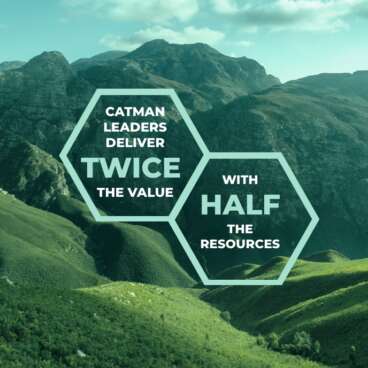
“Influence the Future” – The 2024 Global Category Management Report
Equip yourself with the knowledge and tools needed for tomorrow’s challenges.
- Strategic Focus: Gain insights into top practices that drive improvements.
- Value Delivery: See how leaders maximise value beyond expectations.
- Team Efficiency: Deliver twice the value, with half the resources.
- Industry Benchmarking: Assess how you measure up to industry standards.
- Expert Knowledge: Extract actionable advice from leading global case studies.
Category Management experts who help you develop strategies that deliver broad value and sustainable market-leading performance at the heart of long-term procurement value delivery.
€112m
Organisations that have fully optimised category management can achieve as much as €112m savings plus sector leading benefits in risk reduction and revenue increase.
€62m
€62m per €1bn of spend is the average amount organisations can expect to extract when category management is fully embedded.
500%
Building and implementing category management capability typically delivers an ROI greater than 500%.
We are global Category Management experts who deliver value well beyond cost savings
Many organisations that claim to have adopted a category management approach have simply organised their teams into category groupings. They focus on volume consolidation and competitive tension, and rarely have they trained their teams in category strategy development and implementation.
Those organisations that have optimised and embedded category management have transformed procurement teams into influential commercial experts and trusted business partners. They see a step change in the scale and range of value opportunities they help their organisations to identify and implement.
Co-creation in Category Management is fundamental for greater value
Its value lies in deep collaboration with stakeholders and alignment to their requirements. These behaviours result in the widest possible range of value levers being accessed for each category – covering cost reduction, risk reduction, sustainability and revenue improvement.
Other performance outcomes that will be improved:
Significant uplift in stakeholder satisfaction and engagement: With co-creation of category strategies at the heart of the approach, stakeholder’s understanding, motivation and commitment increases dramatically.
Speed and quality of strategy creation and implementation: Support from motivated and committed stakeholders ensures that relevance and quality of category management strategies increases, as does implementation success.
Increase in procurement capability and professionalism: Improvements in category management specific learning and behaviours can be measured through assessments with managers and peers.
Boost in category manager confidence: Operating as a trusted advisor to stakeholders is a key aim for category managers, and by using category management effectively they report increased confidence in working with stakeholders.
Our approach to Category Management
Operating since 2003, Future Purchasing are global category management experts, building and implementing category management strategies that deliver broad value and sustainable market-leading performance.
We know what good looks like
We have developed and we own the world’s largest and most targeted benchmark data on the key success factors that deliver exceptional category management outcomes. This gives us a unique window into what ‘good’ looks like, and our clients benefit from the fact that we continually refresh our approach based on these insights.


Tried and tested methodologies and toolkit
Applying our unique Track8 process and toolkit, we create a customised way of working, involving ‘how to’ guides, templates, communication and governance tools. In conjunction with our specialist advice and steering, we embed one way of working that delivers a permanent change in business performance.
Shifting mindsets
Using the intelligence from our data and our 19+ years of experience of implementing category management in global organisations, our consultants help client teams drive innovation and balance strategic and tactical impact from board level to category manager.
We combine coaching, mentoring, peer learning and real life projects with interactive workshops. Individuals are supported to practice, use and permanently adopt new skills – becoming experts in category strategy, implementation and stakeholder engagement.
Our consultants excel at: shifting mindsets: developing capability: engaging stakeholders: role modelling best practice.


“Combining leadership skills with the challenges we face on a day-to-day basis with our teams and category management projects is incredibly powerful.“
Global mining company
How we can work with you to maximise procurement alignment to deliver sustainable outcomes, improved SRM and competitive advantage
Our purpose is to ensure our clients achieve the performance outcomes available to the world’s best category management teams.
For Leadership Teams
We use our learnings from more than 90 category management implementations and our unique research to build consensus on the custom operating model required for a sustainable category management capability. This is the foundation that is so often missing when category management is implemented.
For Category Managers
Future Purchasing’s tailored learning programmes equip category managers with the technical and behavioural skills they need to identify and capture all opportunities that lead to value delivery. Through this training they build an understanding of category management techniques and strategies and learn how to implement them.
Category Management FAQs
What is category management and why does it matter?
Category management treats related spend as strategic business units with tailored strategies rather than managing individual suppliers transactionally. It encompasses understanding market dynamics and supplier landscape, developing a 2-3 year strategy, managing suppliers strategically, conducting strategic sourcing, negotiating contracts, delivering value through performance tracking, and continuous improvement. It matters because it shifts procurement from transactional buying to strategic value creation. Organizations achieve 5-15% cost savings, better supplier quality and innovation, reduced risk, and faster decision-making.
How do you develop a category strategy?
Analyze current spend, suppliers, contracts, and performance. Research market dynamics, supplier landscape, and pricing trends. Assess supply chain risks. Identify opportunities for cost reduction, quality improvement, sustainability, and resilience. Gather stakeholder requirements. Develop 3-5 strategic options (e.g., consolidate suppliers versus diversify). Evaluate against criteria: cost, risk, quality, sustainability. Recommend the preferred strategy with a 2-3 year implementation roadmap including sourcing events, supplier transitions, and milestones. Development takes 4-8 weeks and costs £10-25K depending on complexity.
What are the key steps in category management?
The cycle consists of: Analyze (understand current spend, suppliers, market, requirements), Strategize (develop aligned category strategy), Source (conduct competitive RFx to select suppliers and negotiate), Implement (transition to new suppliers and train stakeholders), Manage (monitor performance, enforce contracts, manage relationships), Optimize (drive continuous improvement), Monitor & Report (track KPIs and update strategy based on market changes). This cycle repeats every 2-3 years as sourcing is re-run or continuously as markets evolve. Effective management requires dedicated category managers, data access, executive sponsorship, and supplier collaboration.
What tools and frameworks support category management?
Spend analysis tools consolidate patterns and identify opportunities. Market intelligence reveals supplier landscape and trends. Portfolio analysis (Kraljic matrix) prioritizes by strategic importance and complexity. Risk assessment tools identify supply chain risks. Cost modeling reveals drivers and benchmarks. Sourcing toolkits provide RFx templates and evaluation frameworks. Contract templates standardize terms. Supplier scorecards track performance. Category strategy templates guide development. Maturity models assess capability gaps. Tools are most effective when integrated into a system supported by procurement platforms—without them, category management becomes ad-hoc and inconsistent.
What role does spend analytics play in procurement strategy?
Spend analytics provides the foundation for strategic decisions. It consolidates data from multiple systems into a single view, revealing what your organization buys, from whom, and at what cost. It uncovers consolidation opportunities, highlights maverick spend and compliance leakage, and identifies supplier concentration risks. Analytics benchmark internal pricing against market and reveal cost reduction opportunities. They track supplier performance against targets and monitor contract compliance. Analytics tell the story—translating data into insights that drive action. Without visibility, procurement operates blind.
How can AI improve category management?
AI rapidly consolidates and cleans spend data, identifying patterns humans might miss and flagging opportunities automatically. It monitors supplier news, financial performance, ESG compliance, and market positioning in real time. AI tracks pricing trends and competitive alternatives continuously. It drafts RFQs, evaluates bids, and recommends suppliers. AI analyzes supply chain risks and alerts to emerging issues. It reviews contracts, identifies renewal opportunities, and suggests renegotiation tactics. AI models negotiation scenarios and recommends strategies. It even predicts supplier performance and quality issues before they occur. The result: category managers focus on strategy, relationships, and innovation.
What category management software and tools do you recommend?
Category management requires integrated platform support: spend analytics (consolidate, analyze, identify opportunities), supplier intelligence (monitor financial health, ESG, risk), sourcing platforms (RFx management, bid evaluation), contract management (centralize, track obligations, automate renewals), supplier portals (collaboration and communication), and analytics dashboards (real-time KPI tracking). Most organizations benefit from integrated platforms (Coupa, BravoSolution, Ariba) rather than point solutions, reducing complexity and integration costs. Selection should be based on your maturity, requirements, and roadmap. Implementation typically takes 6-12 months.
How do you implement category management software?
Gather requirements defining must-haves versus nice-to-haves. Evaluate 2-3 vendors against requirements and total cost of ownership. Prepare data by consolidating from multiple systems and defining master data. Configure the system for your categories, organizations, and workflows. Integrate with ERP, supplier systems, and data sources. Pilot with 1-2 categories to test and refine. Train procurement teams, business units, and suppliers. Roll out across categories with support during stabilization. Continuously optimize configuration and improve adoption. Implementation costs £300K-£1M+ depending on complexity; typically takes 6-12 months. Success requires executive sponsorship, dedicated project management, strong change management, and adequate resources.
What features matter most in category management software?
Critical features: Spend analytics (consolidate, analyze, benchmark), supplier data management (master data, performance, risk, contracts), RFx & sourcing (process management, bid evaluation), contract management (centralize, track obligations, renewals), performance tracking (scorecards, KPIs, compliance), reporting (dashboards, drill-down, mobile), workflow & automation (approvals, notifications, triggers), integration (ERP, finance, suppliers, data sources), user experience (intuitive, mobile, minimal training), and scalability (growth without degradation). Don’t try to use every feature—implement core features well. Advanced features are often underutilized.
How do you optimize spend in a category?
Use data and strategy to maximize value. Analyze spend patterns, concentration, and pricing; identify opportunities. Research supplier landscape, pricing trends, and alternatives. Identify consolidation opportunities and quantify savings. Find cost reduction opportunities through price reduction, renegotiation, process improvement, or alternatives. Trade off cost reduction against risk, quality, and sustainability. Execute competitive sourcing to drive improvements and favorable contract terms. Monitor achievement and supplier performance; identify new opportunities. Optimization is continuous. Most categories have 3-7% annual opportunity through better sourcing, consolidation, and negotiation.
How can we implement spend visibility across the organization?
Consolidate spend data from all sources (ERP, P2P systems, corporate cards, invoices, suppliers) with defined governance. Establish a single supplier master and consistent spend classification. Deploy an analytics platform (Coupa, Determine, BravoSolution) to consolidate and analyze data. Create dashboards visible to procurement, finance, business unit leaders, and suppliers with appropriate access controls. Train teams to access, interpret, and act on spend data. Set data quality standards and establish accountability for accuracy. Continuously fill gaps and add new sources. Implementation takes 3-6 months. ROI comes through improved decisions, compliance, and cost reduction enabled by visibility.
How does spend analytics support category strategy?
Analytics directly enable strategy development and execution. Quantify baseline spend by supplier, product, location, and cost center to determine your addressable market. Identify top suppliers and concentration to assess consolidation opportunities and supplier risk. Compare unit costs across suppliers to find pricing anomalies and renegotiation opportunities. Track contract utilization and identify maverick spend outside agreements. Analyze cost reduction opportunities and quantify savings potential. Use portfolio analysis to prioritize categories by strategic importance. Monitor supplier performance post-sourcing and track value realization. Benchmark pricing against peers to identify market trends.
Integrated services to change procurement behaviour
Our consultants’ wealth of experience means we know what combinations of coaching, training and consultancy will achieve sustained behaviour change and deliver maximum value from your procurement team. We customise our three core services to fit your team’s requirements.

Procurement Consultancy
We fill gaps in procurement teams where in-house capability is missing. We undertake planning and strategic alignment activities where there is no internal resource.

Procurement Coaching
Our experts lead virtual or face-to-face classroom events by introducing the key tools and concepts of strategic alignment. Participants build their own strategic alignment plans.

Procurement Training
We work on real strategic alignment projects, providing coached planning support and facilitating key meetings with stakeholders to ensure that tools are applied correctly.
Other areas of expertise

Strategic Alignment
Aligning procurement activity with broader business strategy delivers sustainable outcome, improved stakeholder engagement and competitive advantage

Supplier Management
Systematically unlock the best performance and value from your supplier relationships

Procurement Negotiation
Maximising procurement negotiation outcomes through great planning, technique and alignment with category and supplier strategies
Latest procurement insights
Be the first to benefit from our Guides, Blogs and Case Studies for best practice in Category Management, Supplier Management, Negotiation and Transformation for the Procurement community.

Blog
Designing a Procurement Academy that delivers real performance
15/05/2026
Read More

Video & Blog
Why AI demands a procurement operating model rethink — and what it really means for your team
06/05/2026
Read More
Video & Blog
Strategic Procurement: Building Resilient Defence Supply Chains
17/04/2026
Read More